
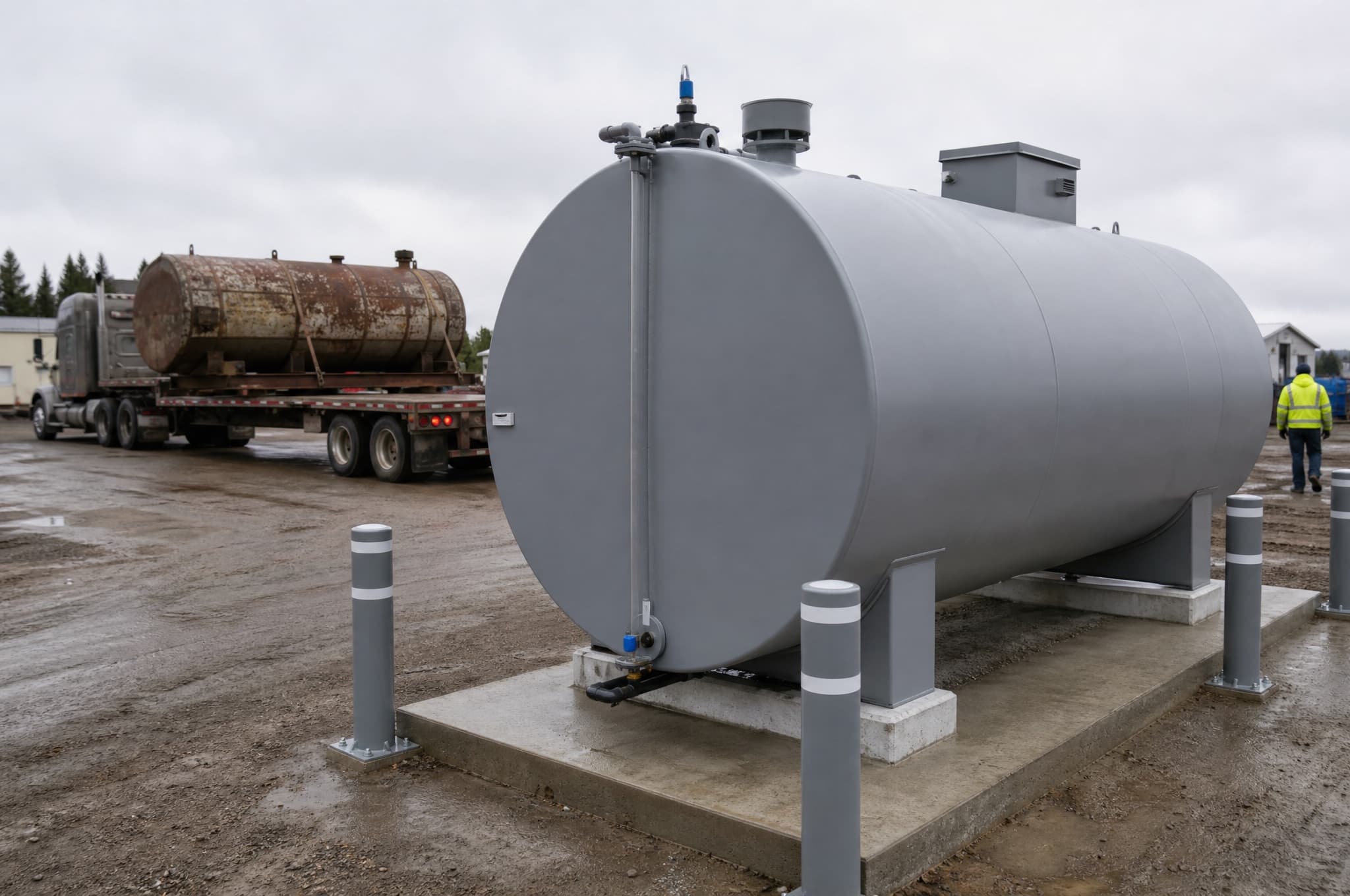
Replacing or upgrading a tank? Design it before anyone prices it.
The calls sound like this. "Our tank is old and needs to be replaced." "Our UST sump failed testing." "We need more fuel-storage capacity." "We want to replace the underground tank with an aboveground one." Sometimes a failed test or a violation forced the question. Sometimes the owner simply knows the system is at the end of its life and wants to get ahead of it.
At a glance
Managing Member · B.S. Civil Engineering, Georgia Tech · 15+ years in fuel systems · Updated September 2026
What is usually going on is that the existing system was installed under older rules, has been patched a few times, and no longer matches current requirements for containment, monitoring, overfill protection or tank construction. Replacing one piece often pulls the rest into the current code. The decision the owner actually faces is not "repair or replace" so much as "how much of this system do I want to carry forward, and what is the cleanest way to a system I will not have to think about for a long time."
Who this applies to
- Fleet and municipal fueling sites with tanks and dispensers past their service life
- Retail station owners replacing a UST system or upgrading dispensers and piping
- Property managers with an aging heating-oil or generator UST they want to move aboveground
- Facilities with a failed STP sump, dispenser sump or spill bucket that is not worth patching again
- Operators who need more storage capacity than the current tanks provide
- Shops and dealerships upgrading waste-oil, motor-oil or lubrication storage
What is usually going on
Fuel systems age in predictable ways. Single-wall steel tanks and piping reach the end of their warranty and their regulatory life. Fiberglass sumps crack and take on water. Spill buckets fail hydrostatic tests. Overfill valves stick. Line leak detectors and ATG probes fail. Dispensers stop matching current UL listings. Cathodic protection systems stop reading.
Two things make replacement more than a swap. First, the rules changed. A tank installed under 1980s or 1990s standards may not have the secondary containment, interstitial monitoring, sump sensors, under-dispenser containment or overfill protection that 40 CFR 280, NYSDEC Part 613, the county programs, or Virginia's 9VAC25-580 now require. Second, agencies generally treat a substantial modification as a new installation for permitting purposes, which means the replaced portion has to meet current code and the reviewer will look at the rest.
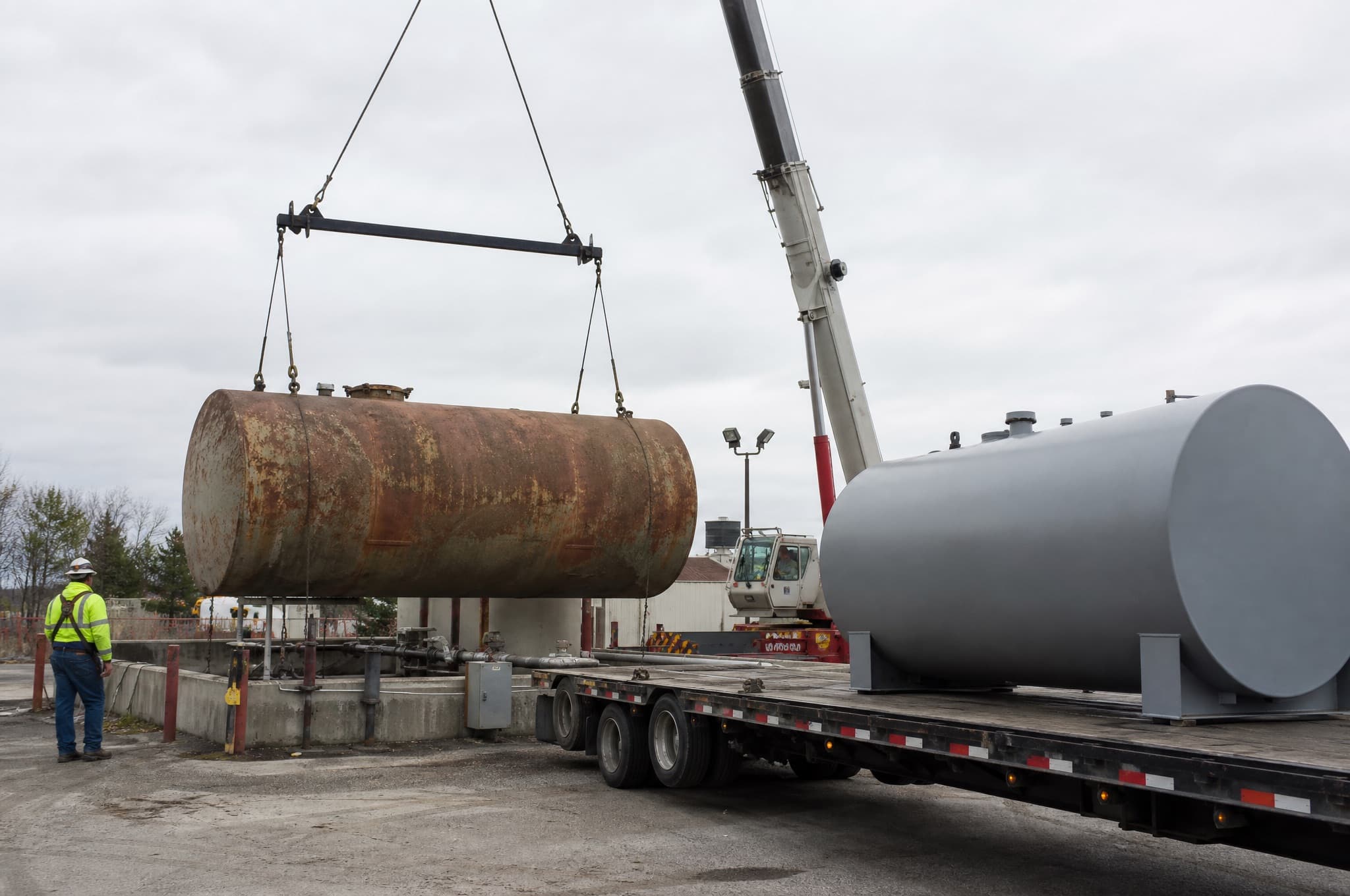
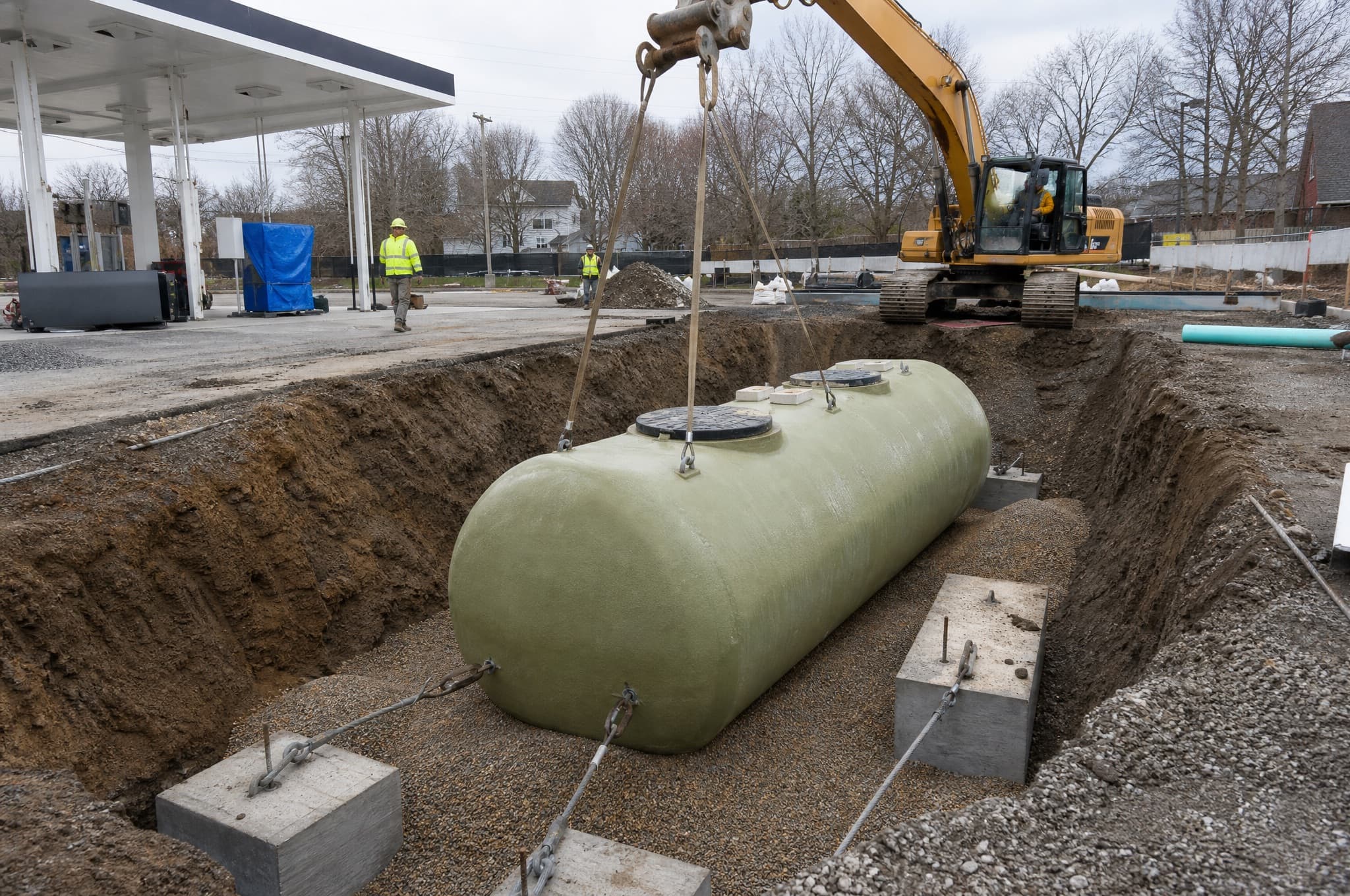
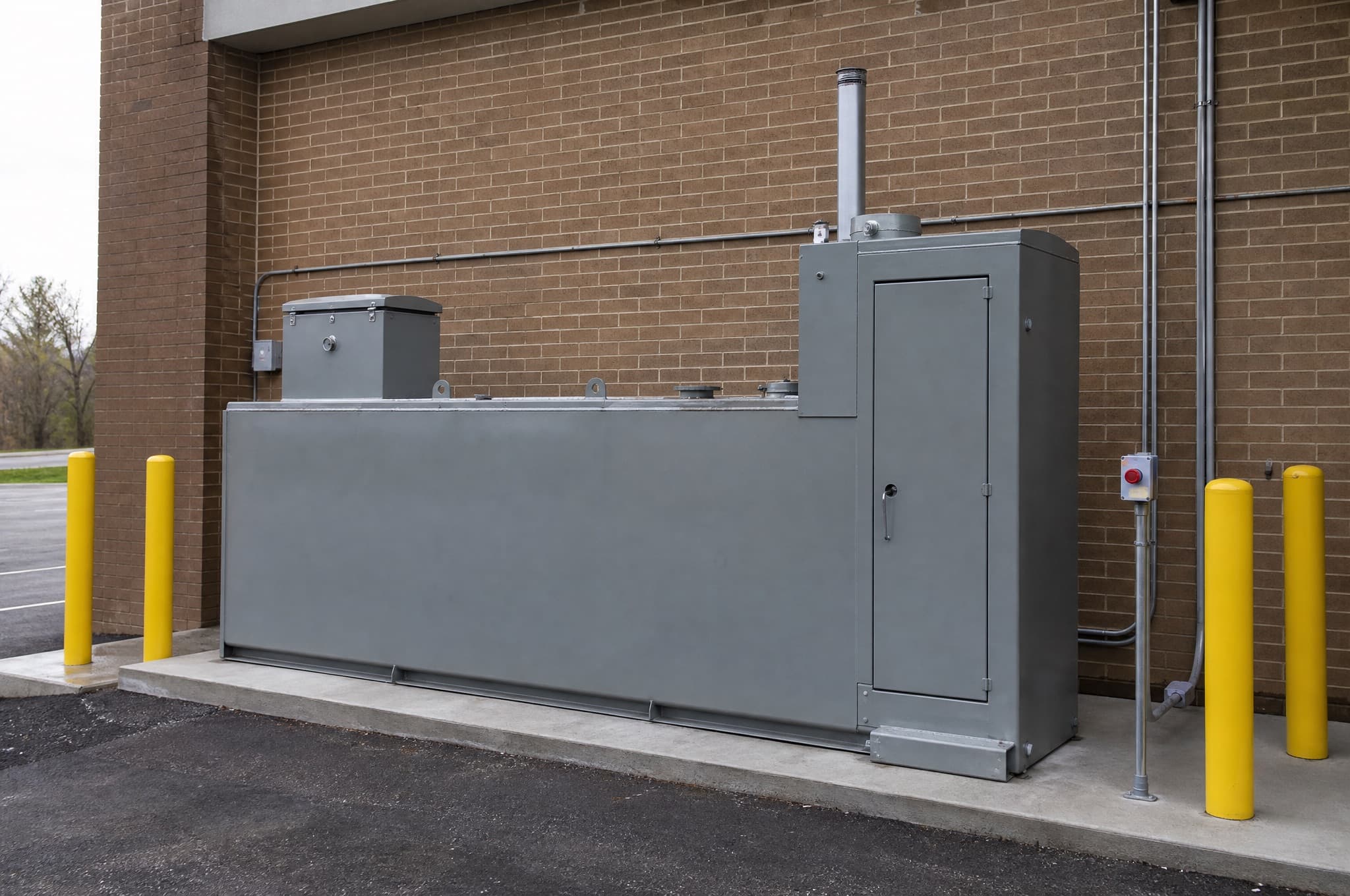
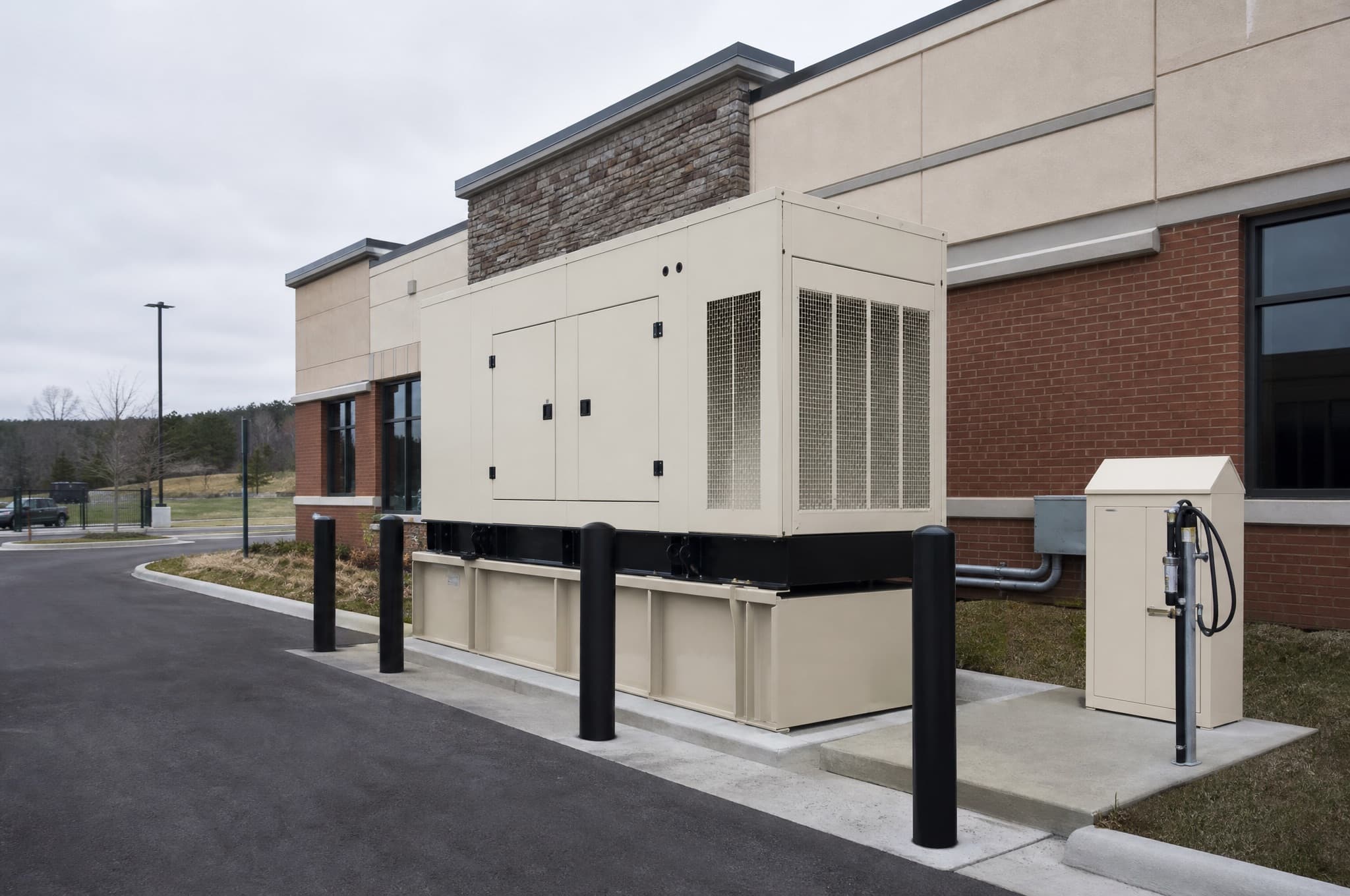
The upgrade projects we see most: replacing a failed UST sump; replacing a whole retail UST system; converting underground #2 fuel oil storage to an aboveground tank; adding a second tank or a larger tank for capacity; replacing an old generator tank with a UL 2085 protected AST; modernizing a fleet fueling island with new dispensers and a fuel-management system; and correcting overfill protection and secondary containment that an inspector flagged.
The decision: repair, replace in kind, or convert
Repair makes sense when the failed component is isolated, the rest of the system is documented and compliant, and the tank has meaningful life left. A cracked spill bucket on a ten-year-old double-wall system is a repair.
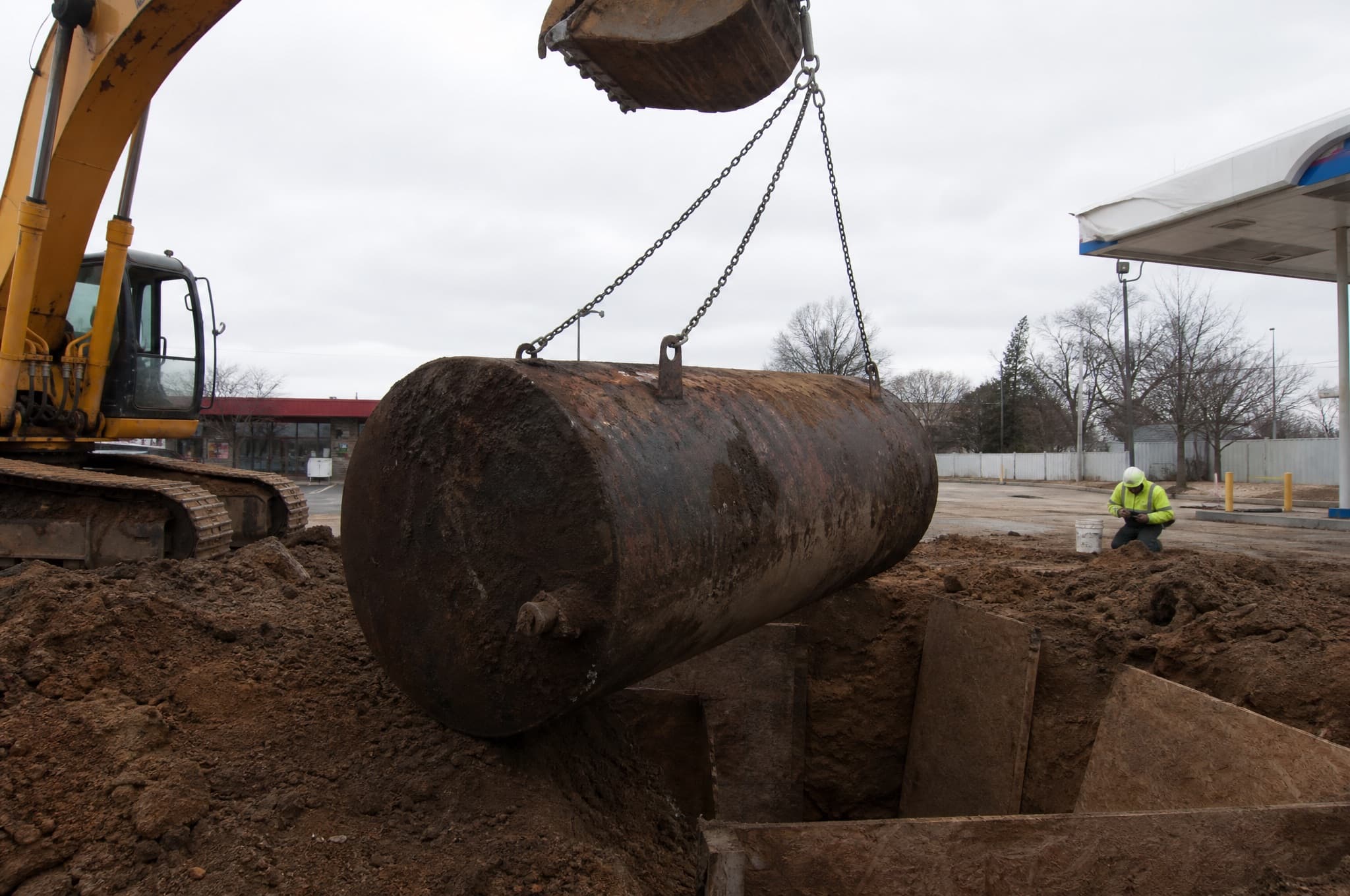
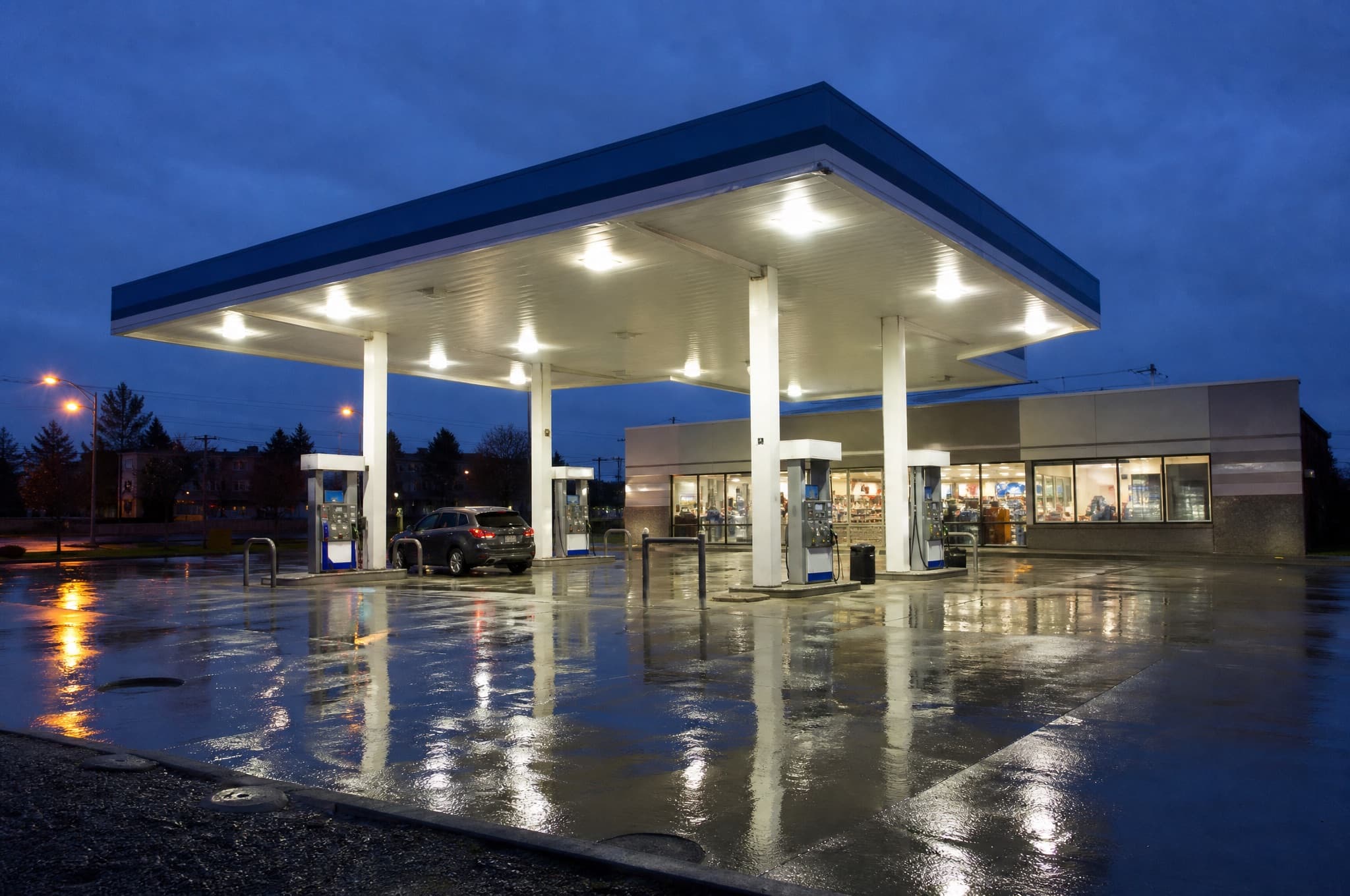
Replace in kind makes sense when the tank or piping is at end of life but the location, capacity and configuration still work. A new double-wall UST in the same excavation, with current sumps, sensors and dispensers, is the typical retail path.
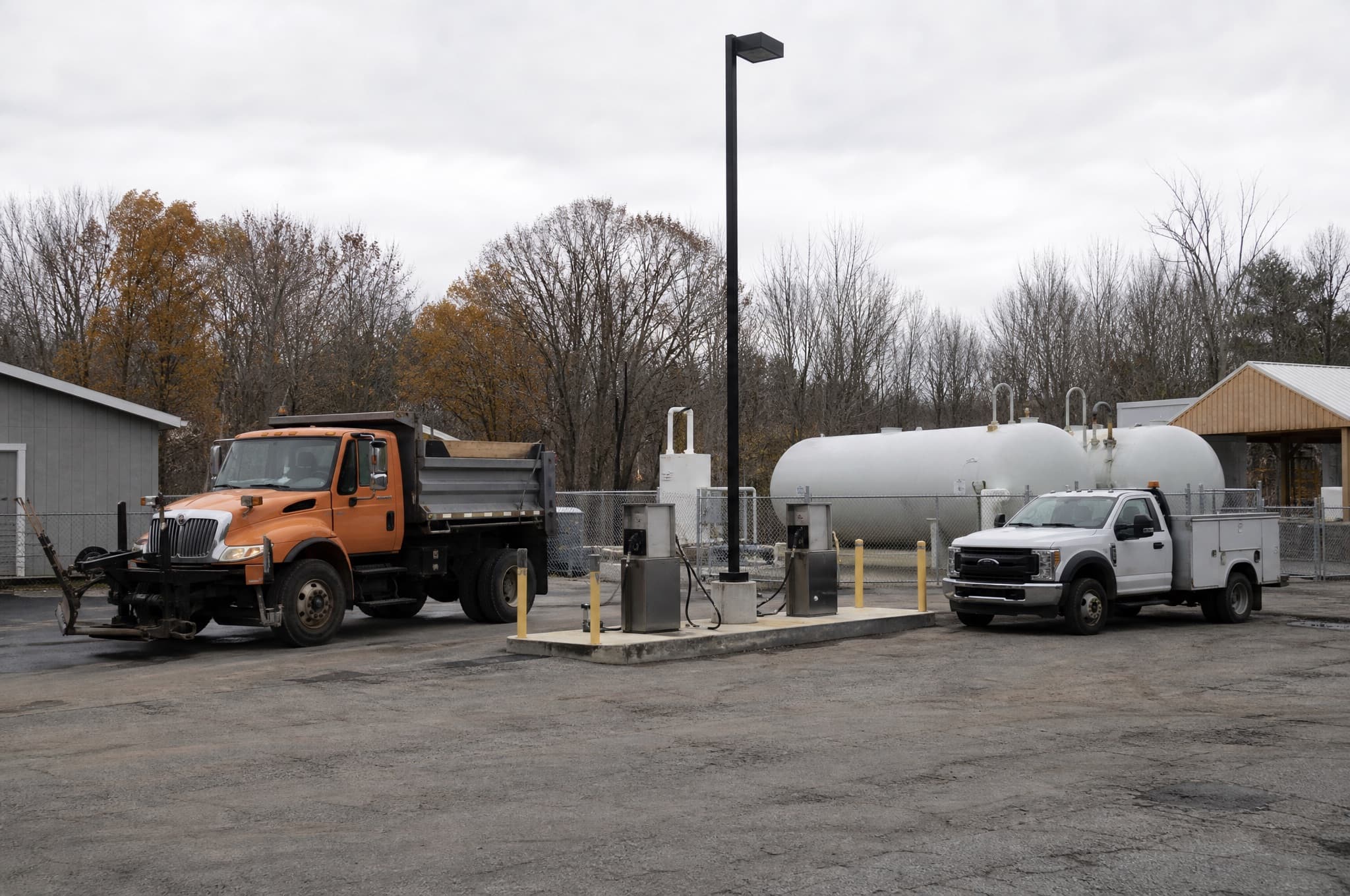
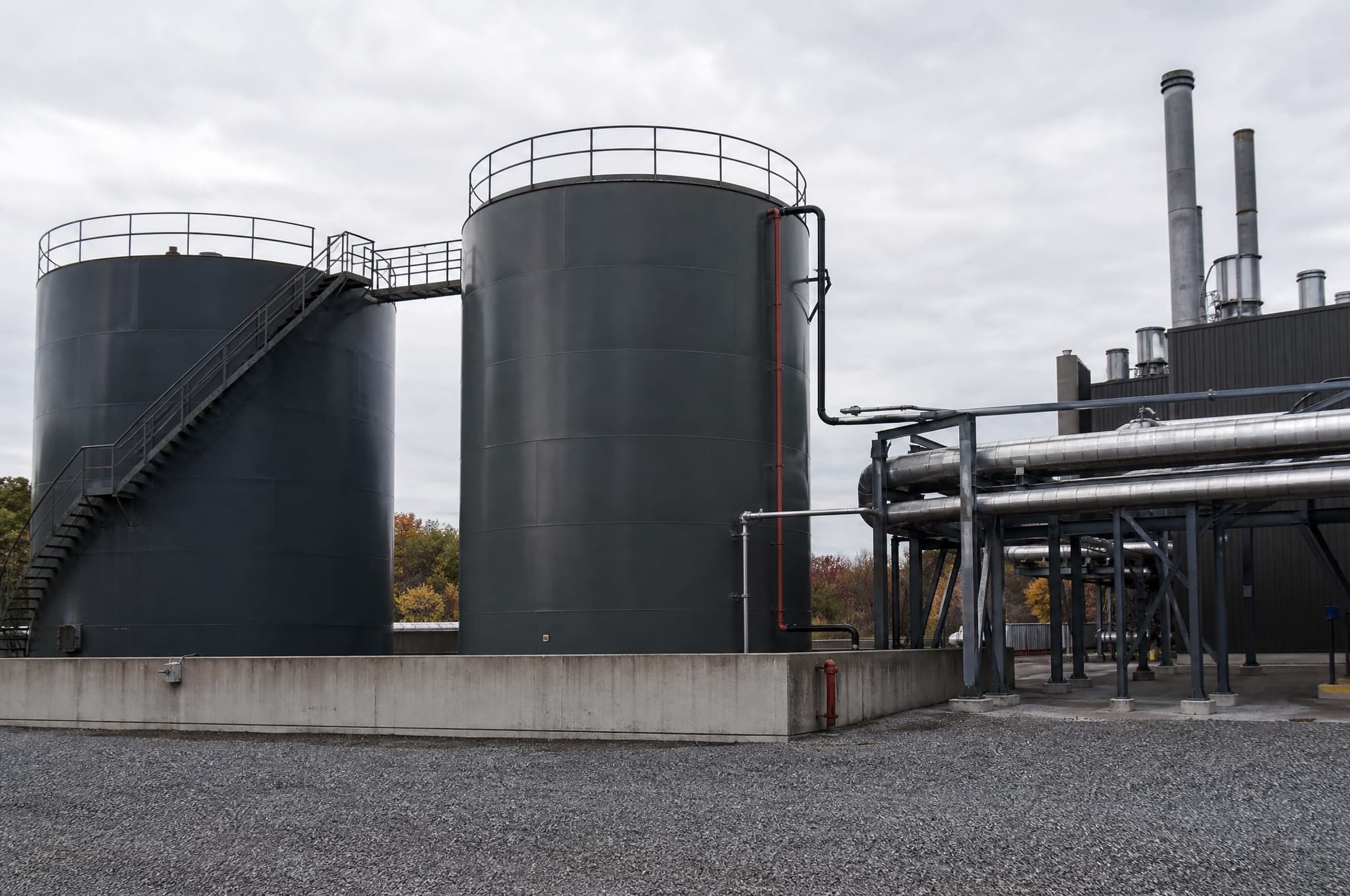
Convert makes sense when the owner wants out of the underground program. An aboveground tank eliminates most of the UST monitoring and testing burden and is easier to inspect, but it needs space, fire-code setbacks, impact protection, and often a protected or vaulted tank listing. Heating-oil and generator tanks convert well. High-throughput retail usually stays underground.
We help you make this call with the site, the rules and the numbers in front of you. We do not have a preference for one answer.
- Age, construction and warranty status of the existing tank and piping
- Whether the site has room for an AST with the required setbacks
- How much of the existing system would have to be upgraded to keep it
- Downtime tolerance. Some sites cannot stop fueling for an excavation.
- Capacity needs for the next ten to twenty years, not just today
- Registration and testing obligations you would carry with each option
Not sure where you stand? Send what you have.
A photo, the notice, or a sentence about the site is enough to start. Matt reviews it personally and comes back with the likely path.
What we do
Investigate. We review your records and the system as it exists. Tank type and age, piping, sumps, dispensers, monitoring, containment, registrations, test history. We identify what is failing, what is out of date, and what will be pulled into the project by the rules.
Develop the strategy. Repair, replace in kind, or convert. Phasing, so you keep fueling if you have to. What the agencies will require for each path.
Design. A complete set the contractor can build from and the agencies can approve. Tank selection and listing, piping and dispensing, sumps and containment, leak detection and ATG, overfill and spill protection, electrical interface, fuel-management interface, site layout and setbacks.
Permit. Permit to construct and permit to operate, PBS registration modification, DEQ notification, fire and building permits, and tank closure approvals for the tank coming out.
Support construction. Bid review so you can compare contractors pricing the same defined system. Submittal review. Field questions. Testing witness where needed. You can bring your own contractor or we can recommend one.
Closeout. As-built drawings, test results, registration updates, closure documentation for the removed tank, and a clean file.
What drives cost
People search "fuel tank replacement cost" and there is no honest single number. What drives it is clear, though.
Underground versus aboveground. Excavation, backfill, paving and the removal of the old tank are large parts of a UST replacement. An AST avoids most of that but adds a pad, protection and setback work. Capacity and number of tanks. Whether dispensing is part of the scope. Dispensers, sumps, piping and fuel-management equipment add up quickly. What is found when the old tank comes out. Contaminated soil changes the project. Phasing to keep the site fueling. Working in stages costs more than one shutdown. Site conditions. Groundwater, tight urban sites, utilities in the way. And the permitting scope, which grows with the number of agencies involved.
Our design and compliance work is a defined fee. The contractor's construction cost is the larger number, and it is far more accurate when the contractor is pricing a complete design instead of a description.
Where this goes next
Once the direction is set, the project runs the same way any new system does: design, permit, bid, build, close out. If the tank coming out is a UST, closure and deregistration are part of the package. If the replacement is at a new location because you are moving, see the moving-or-expanding pathway. If a violation is what started this, resolving the notice and the replacement design usually run together.
Relevant services
The parts of the work this situation usually calls for.
Common questions
How do I know if my tank needs to be replaced or just repaired?
Look at three things: the age and construction of the tank and piping, whether the failure is isolated or a sign the system is wearing out, and how much of the rest of the system would have to be upgraded to current code if you keep it. A single failed component on a modern double-wall system is usually a repair. Repeated failures on an older single-wall system usually point to replacement. We look at the records and the site and tell you which one you are in.
Can I replace my underground tank with an aboveground tank?
Often, yes, and for heating oil and generator diesel it is one of the most common projects we do. The site has to have room for the fire-code setbacks, the tank usually needs a protected or vaulted listing such as UL 2085, and the fire official and health department both review it. Retail fueling generally stays underground. We will tell you early whether your site can support the conversion.
Does replacing a sump or a spill bucket require a permit?
It varies by jurisdiction. Some agencies treat a like-for-like component replacement as maintenance under the existing permit. Others, especially on Long Island, want to be notified or want an amended permit, and a sump replacement often means excavation and testing that the agency wants to witness. We confirm what your agency requires before the work starts.
How much more capacity can I add without a bigger permitting problem?
Capacity triggers vary by agency. Adding storage can push a facility over registration thresholds, change fire-code setbacks, or move an AST into a different tank listing. It is worth designing the capacity you will need for the next decade in one project rather than adding tanks piecemeal, because each addition reopens the permit.
Should I get contractor bids first to see what it will cost?
Bids on an undefined scope are not comparable. Each contractor prices their own assumptions, and the low bid is usually the one that assumed the least. Design first, then bid. The contractors are pricing the same system, the agencies have already approved it, and the change orders are far fewer. You can still involve your contractor from the start, and we work alongside them.
Tell us what is failing and what the site looks like
Send photos, the test report or inspection that started this, and whatever drawings you have. We will tell you whether this is a repair, a replacement, or a chance to convert, and what the defined path to a new system looks like.