
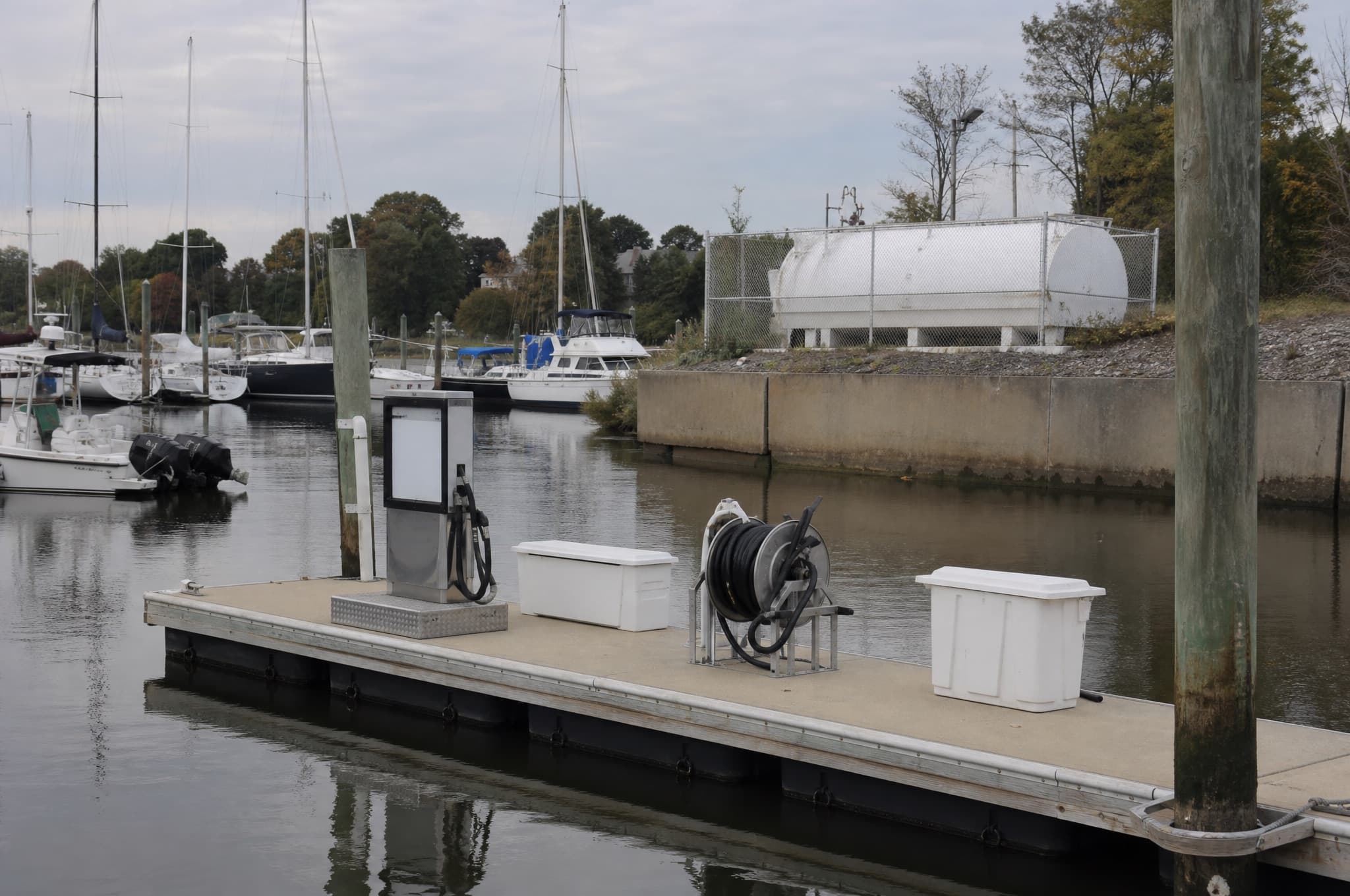
Marina fueling designed for the water, the AHJ and the spill plan
A fuel dock is a fueling system with tides, a shoreline and a spill plan layered on top. ZE designs and permits marina fuel systems so the dock, the tanks and the paperwork all pass.
Marina owners, dockmasters, yacht clubs, boatyards and municipal marinas on Long Island, the Hudson, the Chesapeake and the Virginia rivers operate the same basic system: upland tanks, a long piping run to a fixed or floating dock, and dispensers on the pier selling gasoline and diesel for part of the year. It is a fueling system, and then it is a shoreline structure, a spill risk to surface water and a seasonal operation, each with its own reviewer.
Projects tend to start with the dock. A storm damages or a rebuild replaces the pier, and the old single-wall piping and the dispenser that was never permitted are suddenly in front of the county and the DEC. Or the upland tank has aged out, or an inspection turns up no emergency shutoff at the dock, no containment at the fill, or registration that lapsed years ago. A spill, even a small one, brings the Coast Guard, the state and the insurer to the same conversation. And every one of those conversations asks where the tank sits relative to the water and the flood line.
Marina fueling touches more agencies than most systems, and the site-specific questions are harder: NFPA 30A marine fueling provisions for shutoffs, breakaways and hoses; NFPA 303 for the marina itself; piping that has to cross a tide zone and move with a floating dock; tank siting against fire code separation, flood elevation and wetland setbacks; tidal wetlands and in-water permits from the state, town and, where applicable, the Army Corps; SPCC and spill response on top. Getting all of it onto one plan before the contractor mobilizes is the whole job, and it is why ZE designs marina systems first and permits them as one package.
Typical projects
- New or replacement upland USTs or ASTs serving a fuel dock
- Replacement of aging or single-wall product piping between the tank and the dock
- Dispenser, hose and emergency-shutoff upgrades on fixed and floating docks
- Fuel-system redesign when a dock is rebuilt or reconfigured after storm damage
- Resolution of petroleum storage violations at marinas and boatyards
- Legalization of fueling equipment installed without county, DEC or DEQ permits
- Secondary containment, overfill protection and SPCC coordination for marina tank areas
- Closure of retired USTs at waterfront properties
What has to be settled in design for marina fueling.
Authorities that typically have jurisdiction
- NYSDEC (Part 613, plus tidal wetlands and protection-of-waters permits where applicable)
- SCDHS Article 12, the NCDH storage ordinance or WCDOH Article XXV
- Local fire marshal, building department and town or village trustees
- U.S. Army Corps of Engineers for in-water work, where applicable
- VA DEQ, the Virginia Marine Resources Commission and local wetlands boards
- U.S. Coast Guard for vessel-transfer facilities above its thresholds
- Outside these jurisdictions, the state, county and local authorities having jurisdiction at the project site
Jurisdiction varies by site, tank size and product. ZE confirms the applicable authorities during permit due diligence.
NFPA 30A marine fueling provisions
Emergency shutoff at the dispenser and at a point on shore, breakaway couplings, hose length limits, dispenser placement relative to the water and the slips, signage and extinguishers are specific to marine fueling and are what a fire marshal checks on a dock. NFPA 303 adds the marina-wide fire protection layer. Both are applied through the state fire code and vary in enforcement by jurisdiction.
Piping that moves and lives in salt air
A floating dock needs flexible connectors and expansion provisions where the piping leaves the shore, and every run should be double-wall with containment sumps and line leak detection, because a long run under a dock is a long run nobody can see. Supports, corrosion protection and access for testing are design details that decide how the system ages.
Where the upland tank can sit
Separation from the water and from buildings, flood-zone elevation and anchoring, storm surge, high water table and soil conditions all push on tank location. Aboveground tanks, including UL 2085 protected tanks where clearances are tight, are often the better answer at the waterfront, but the choice depends on the lot and the fire marshal. What is required varies by AHJ and by the mapped flood zone.
Shoreline and wetland permits run on their own clock
In New York, work near the shoreline can involve NYSDEC tidal wetlands or protection-of-waters permits, town or village trustees and wetland boards, and the Army Corps for in-water work. In Virginia, the Marine Resources Commission, local wetlands boards and Chesapeake Bay Preservation Act requirements can apply. These reviews are typically slower than the petroleum permits and should start early, with a marine or environmental consultant where the scope calls for one.
SPCC and spill response
Under 40 CFR 112, aggregate aboveground oil storage above 1,320 gallons in containers of 55 gallons or more, with a reasonable expectation of reaching navigable waters, requires an SPCC plan. Marinas almost always satisfy the water test. Facilities that transfer fuel to vessels above Coast Guard thresholds can carry additional federal facility requirements, and the state and county have their own spill-reporting rules. Spill kits, booms, training and a written procedure at the dock are part of the system.
Seasonal operation and fuel quality
Ethanol-blended gasoline can phase-separate with water intrusion, diesel picks up water and microbial growth over a winter, and tank inventory sits for months. Winterization, water monitoring, fill practices and tank turnover should be built into the design and the operating plan.
Where ZE fits on a marina fueling project.

Fuel System Design
Complete, constructible fuel-system designs with equipment, configuration, codes and AHJ requirements vetted before the contractor prices the job.
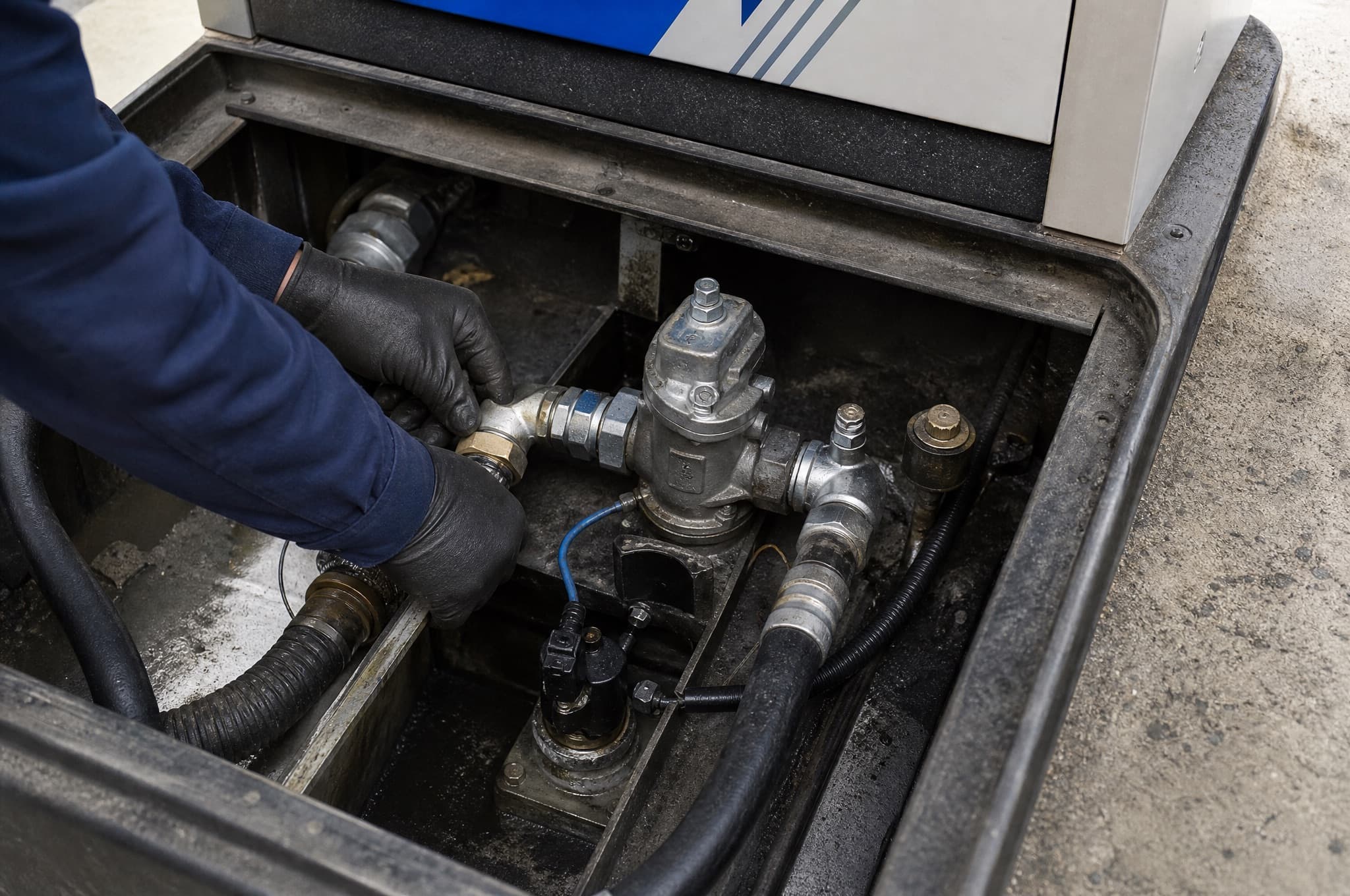
Fuel Piping and Dispensing Systems
Product piping, dispensers, sumps, vapor recovery and fuel-management interfaces designed as one coordinated system.
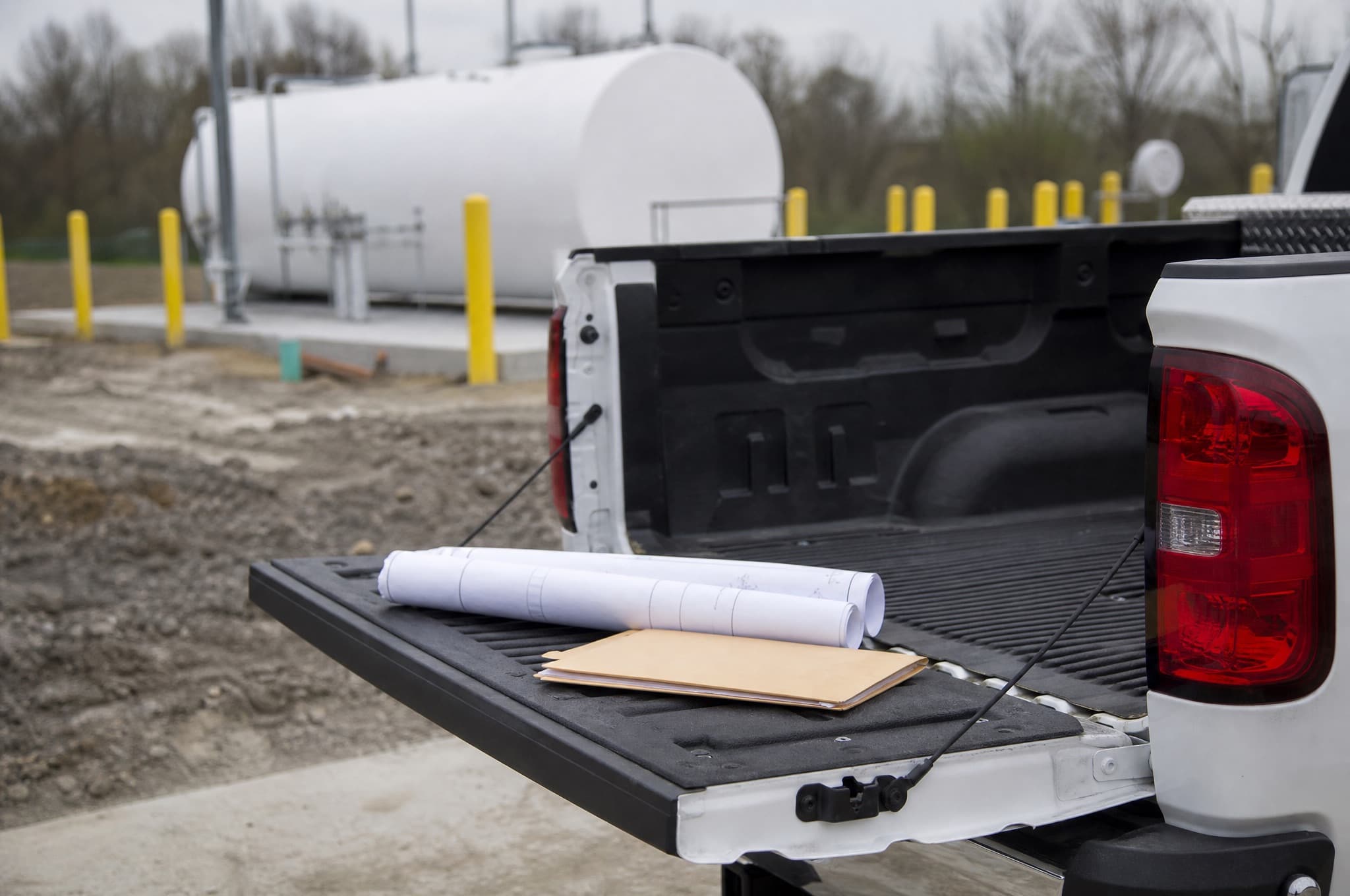
Fuel Tank Permitting
Permit due diligence and approvals from every authority having jurisdiction, handled as part of the design rather than an afterthought.
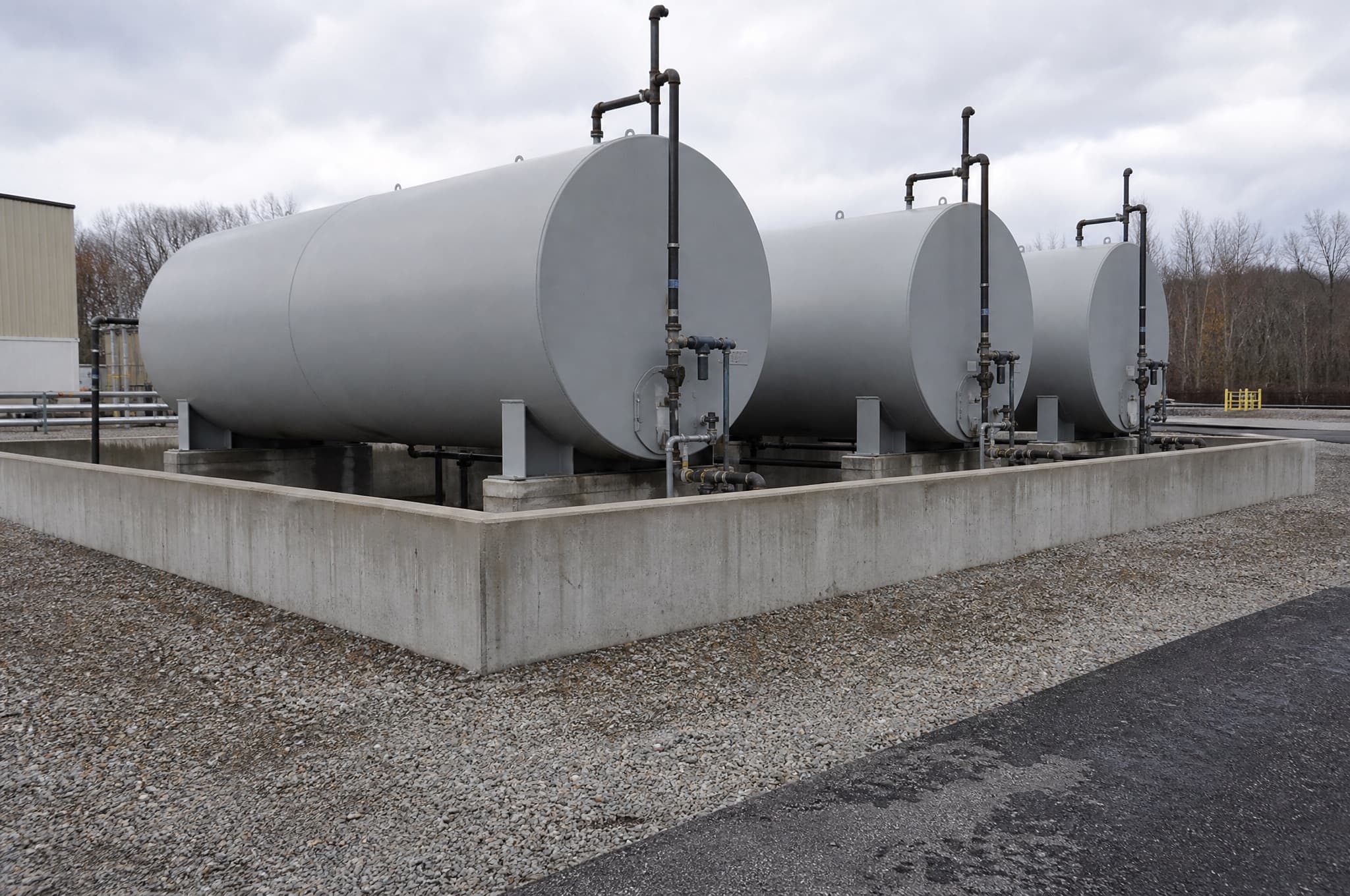
SPCC Plans
Spill Prevention, Control and Countermeasure plans under 40 CFR 112, with containment design coordinated to the facility.
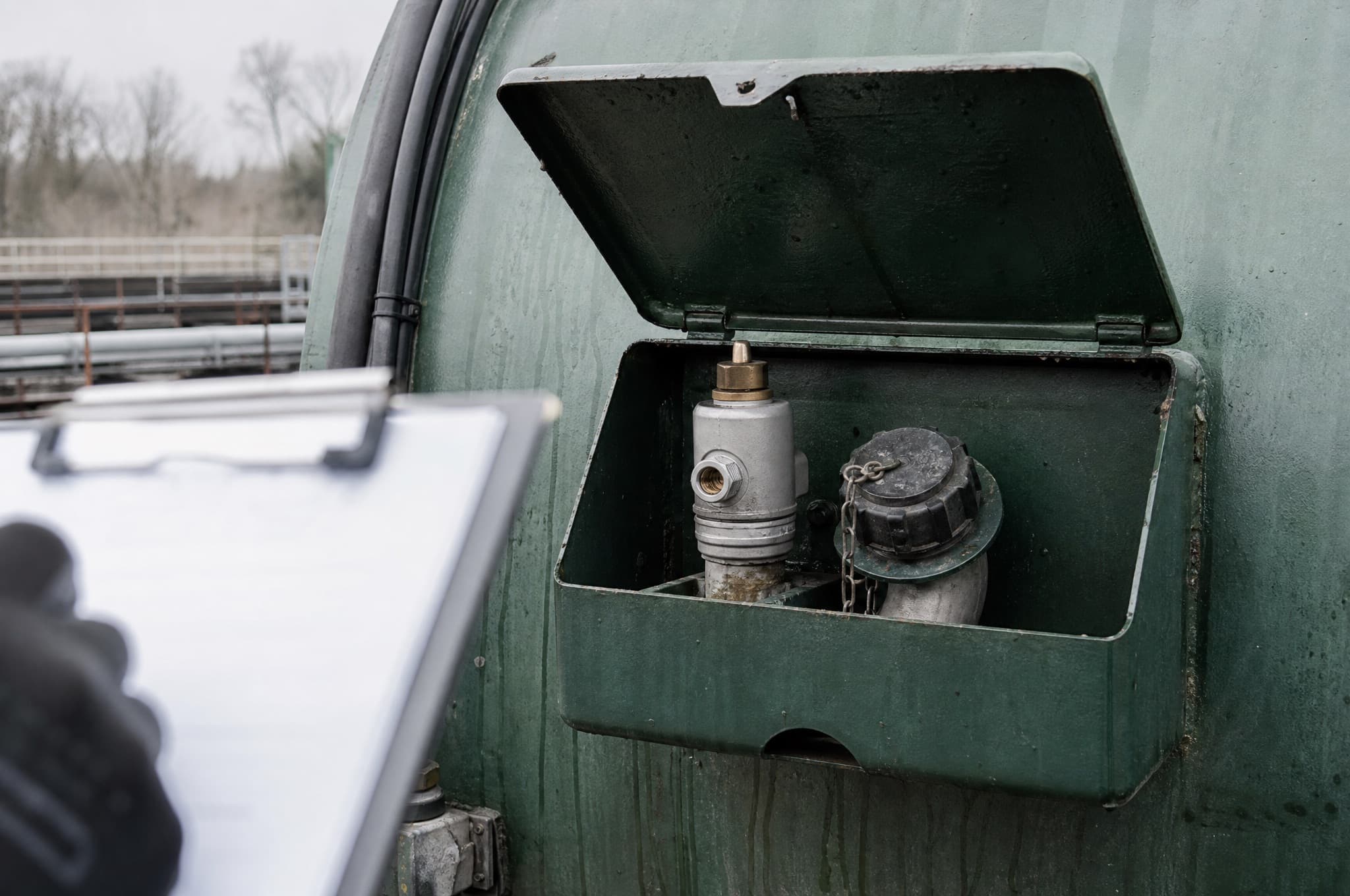
Compliance and Violation Resolution
Petroleum storage violations, unpermitted installations, failed tests and occupancy holds resolved with a defined corrective path.
Start with your situation
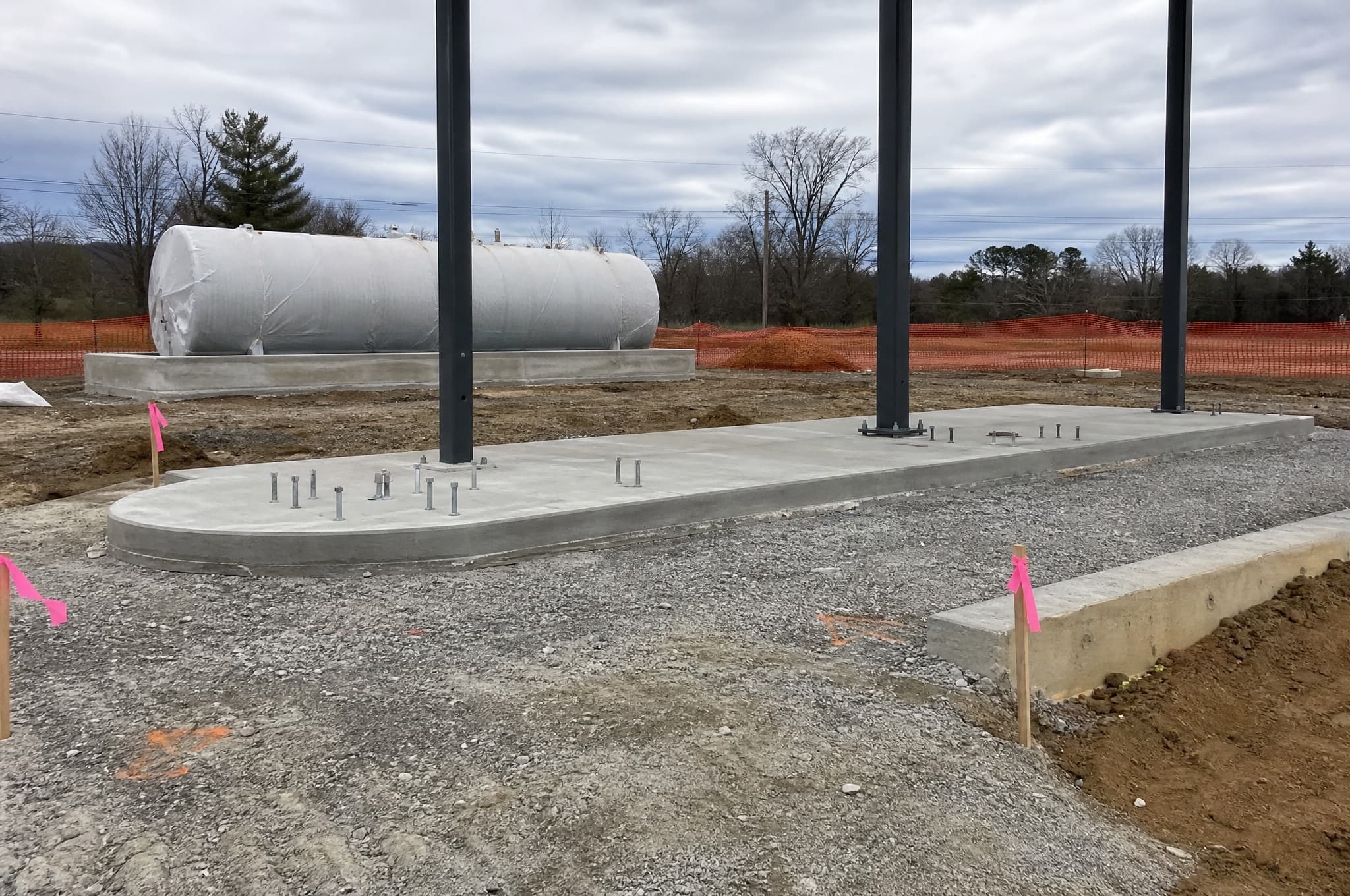 I'm planning a new fueling systemFleet, retail, generator, marina or aviation fueling from a blank page.
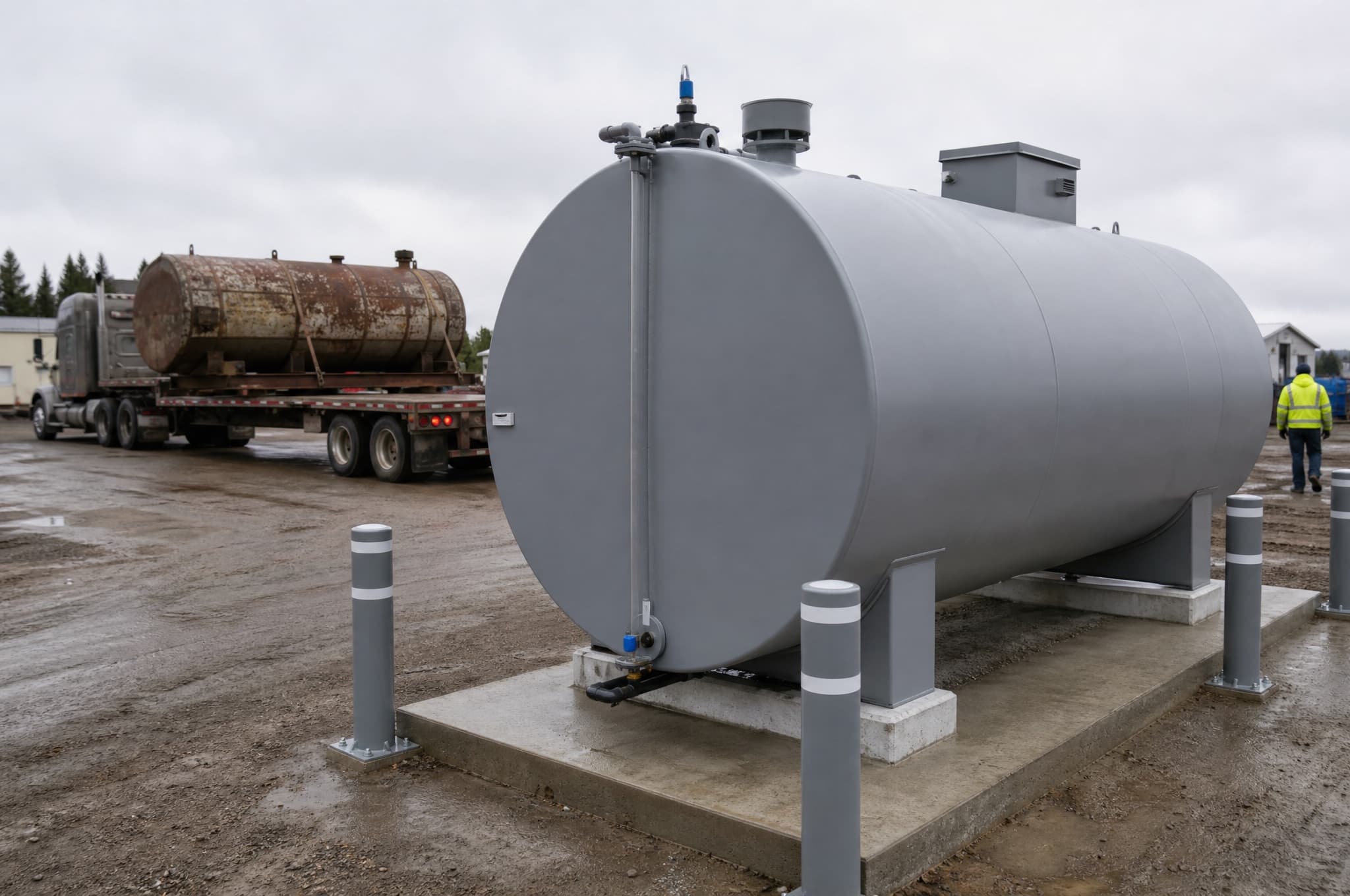 I need to replace or upgrade a tankAging tanks, failed sumps, more capacity, or a UST-to-AST conversion.
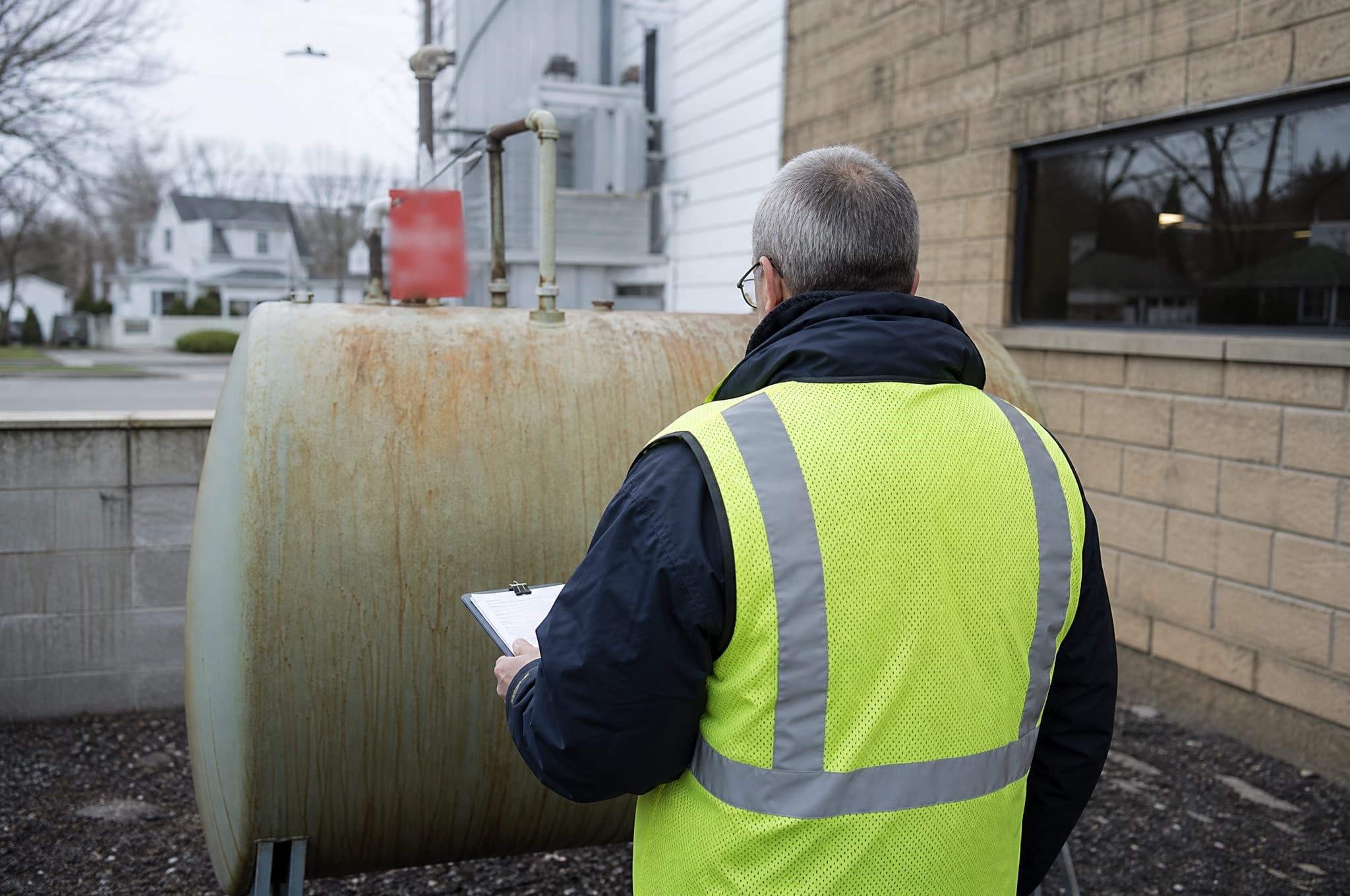 I received a tank violationA notice from the county health department, DEC, DEQ or fire marshal.
About marina fueling.
Not answered here? Ask directly.
Talk to a Fuel-System SpecialistWe are rebuilding our dock. Does the fuel system need new permits?
Usually yes if the piping or dispensers move or are replaced, and a dock rebuild almost always does both. It is also the best opportunity to correct anything the old system was missing, because the agencies are already reviewing the site. ZE designs the fuel system to fit the new dock and permits it alongside the marine work.
Can the dispenser sit on a floating dock?
Yes, with provisions: flexible connectors and expansion where the piping leaves shore, breakaway couplings, emergency shutoffs at the dispenser and on shore, and dispenser placement that satisfies the fire marshal. NFPA 30A addresses marine fueling directly, and acceptance of specific arrangements varies by AHJ.
Do we need an SPCC plan?
If aggregate aboveground oil storage in containers of 55 gallons or more exceeds 1,320 gallons, almost certainly, because a marina can rarely argue that a discharge would not reach the water. Underground storage counts separately under a much higher threshold. ZE coordinates the containment design with the plan so the two match.
How far does the tank need to be from the water?
There is no single number. Fire code separation from the water and structures, flood-zone elevation and anchoring, wetland setbacks and local zoning all apply, and each varies by jurisdiction. The design resolves them for the specific lot, which is why a marina tank location is decided on a survey rather than by eye.
Who handles the tidal wetlands or in-water permits?
ZE handles permit due diligence and the petroleum permits, and coordinates the shoreline and in-water approvals with the owner, the dock contractor and a marine or environmental consultant where the scope requires one. The point is one sequence, so the fuel-system permits and the shoreline permits do not wait on each other.
Send us the situation. We'll tell you the path.
Photos, a violation notice, an inspection report, or just a description of the site. Matt reviews every inquiry personally and comes back with a clear next step.