
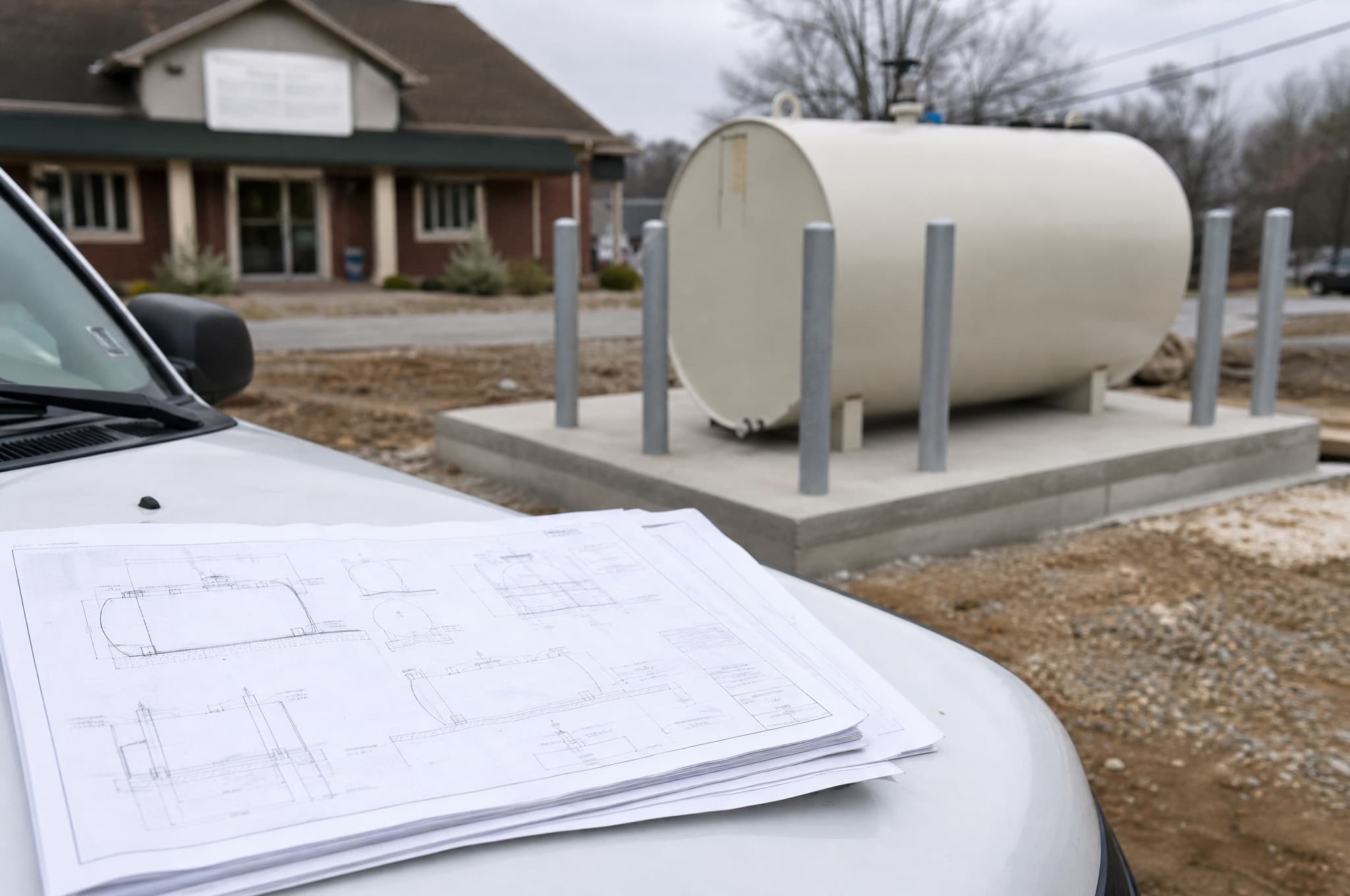
You need a tank permit. Here is what the agency will ask for.
"I need a permit for a tank" is the most common call we get. Sometimes it is a new diesel tank for a generator. Sometimes it is a fleet fueling upgrade, a waste-oil tank at a shop, a replacement UST at a station, or a fill line the building department flagged. Often the owner has already talked to a contractor, and the contractor said the job needs a design and a permit before they can price it or start.
At a glance
Managing Member · B.S. Civil Engineering, Georgia Tech · 15+ years in fuel systems · Updated September 2026
What is usually going on is that more than one agency has a say, and each one wants a specific package. In Suffolk County that is a permit to construct and a permit to operate through SCDHS. In Nassau and Westchester it is the county health department. In New York City it is DOB and FDNY. Everywhere in New York it may also be NYSDEC PBS registration and the local building department and fire marshal. In Virginia it is DEQ notification and the fire official under the Statewide Fire Prevention Code, and every other state has its own version of the same structure. The permit is not a form. It is a design that each of those reviewers can approve.
Who this applies to
- Facility owners and property managers adding a diesel tank for an emergency generator
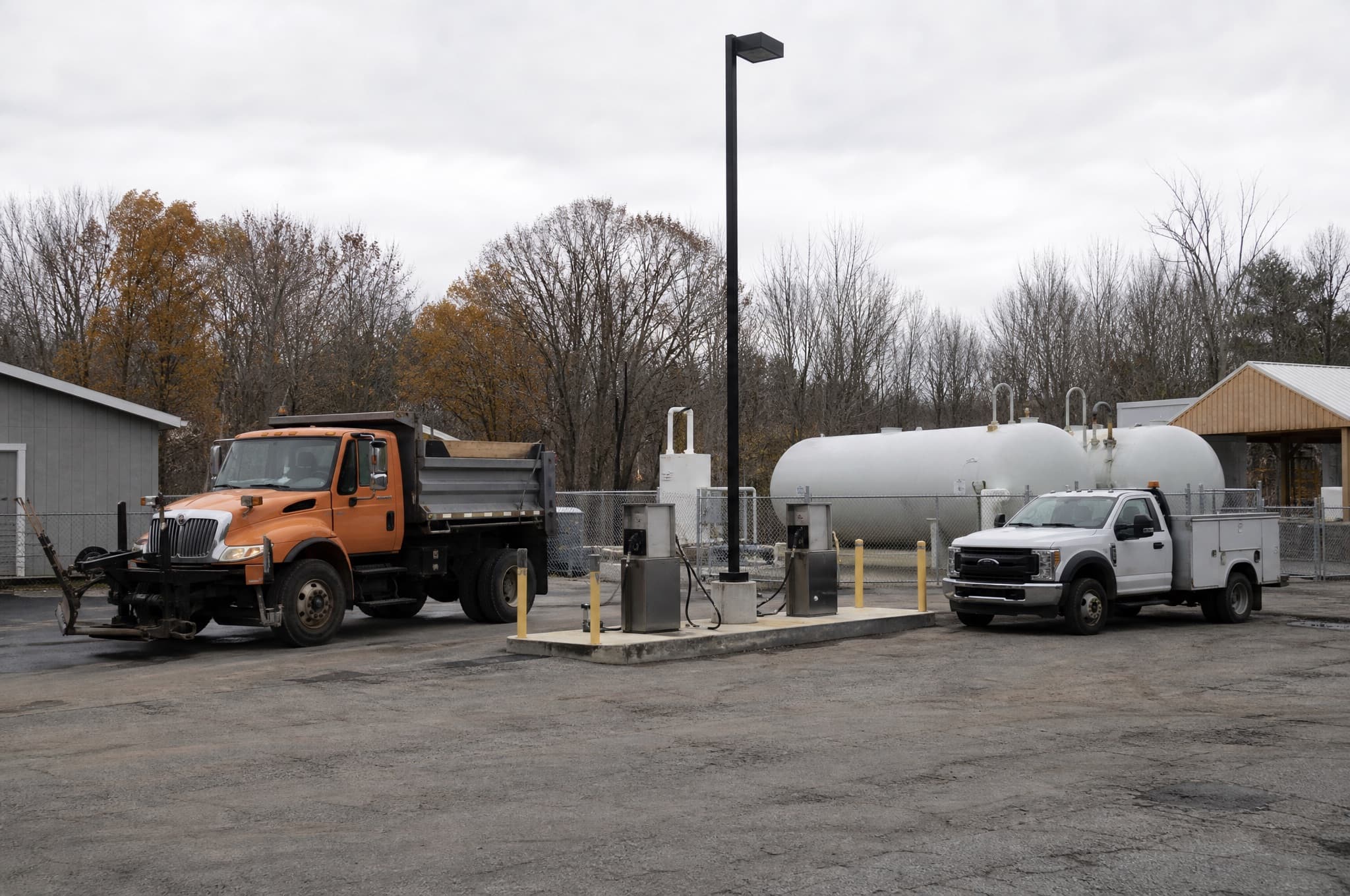
- Fleet managers and municipalities adding or replacing fueling at a yard or garage
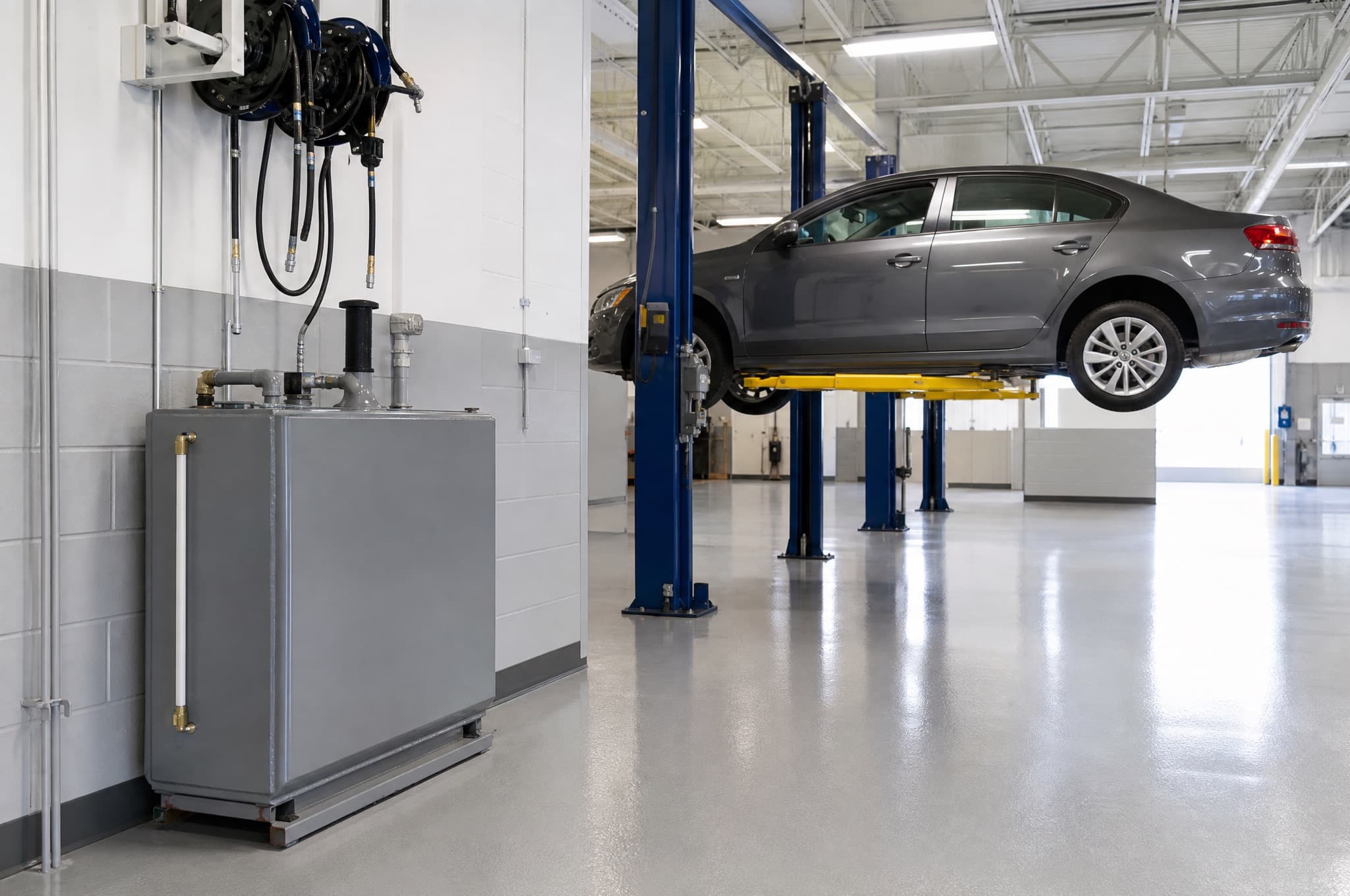
- Repair shop and dealership owners installing motor-oil, waste-oil or lubrication storage
- Retail station owners replacing a UST system or changing dispensers and piping
- Architects, general contractors and engineering firms who need the fuel-system portion of a larger project permitted
- Contractors' customers who were told the job needs a design and a permit before pricing
What is usually going on
A tank permit is really several approvals stacked on one design. Which ones apply depends on where the tank is, what it holds, how big it is, and whether it is above or below ground.
Health department. In Suffolk, SCDHS Article 12 governs petroleum storage and requires a permit to construct and a permit to operate through the Office of Pollution Control. Nassau County and Westchester County run their own programs with their own applications. These reviewers care about tank construction, secondary containment, leak detection, overfill and spill protection, and how the tank sits relative to groundwater and drainage.
State environmental agency. NYSDEC Part 613 requires PBS registration once a facility hits 1,100 gallons aggregate, and it sets design and installation standards. Virginia DEQ regulates USTs under 9VAC25-580 and ASTs under 9VAC25-91, with notification and registration steps of its own.
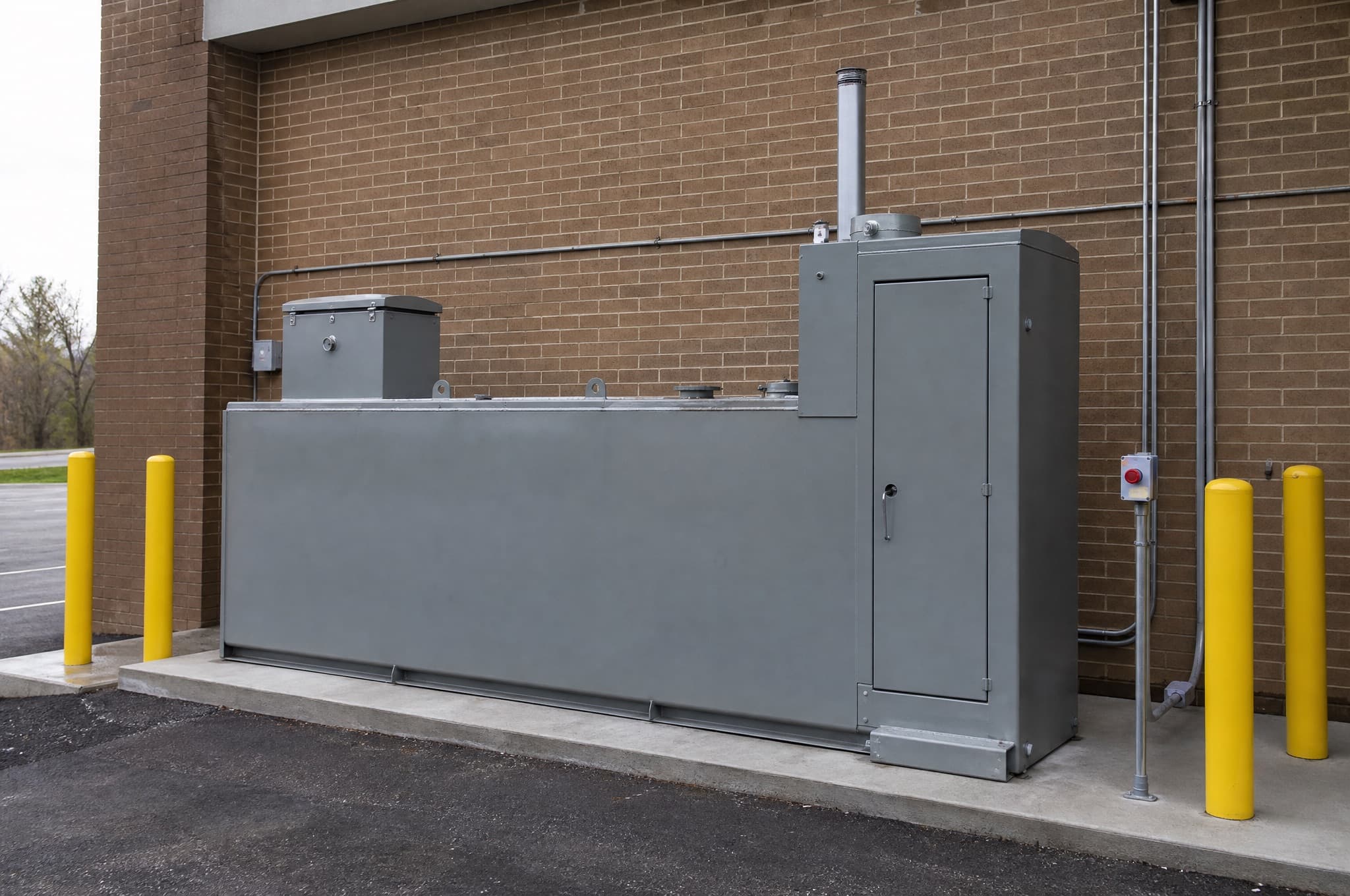
Fire official. NFPA 30 and NFPA 30A, carried into the state fire code, govern where an aboveground tank can sit, setbacks, tank listing (UL 142, UL 2085 for protected tanks), venting, dispensing and impact protection. In Virginia that is the Statewide Fire Prevention Code through the local fire official. In New York it is the state fire code through the local fire marshal, and FDNY in the five boroughs.
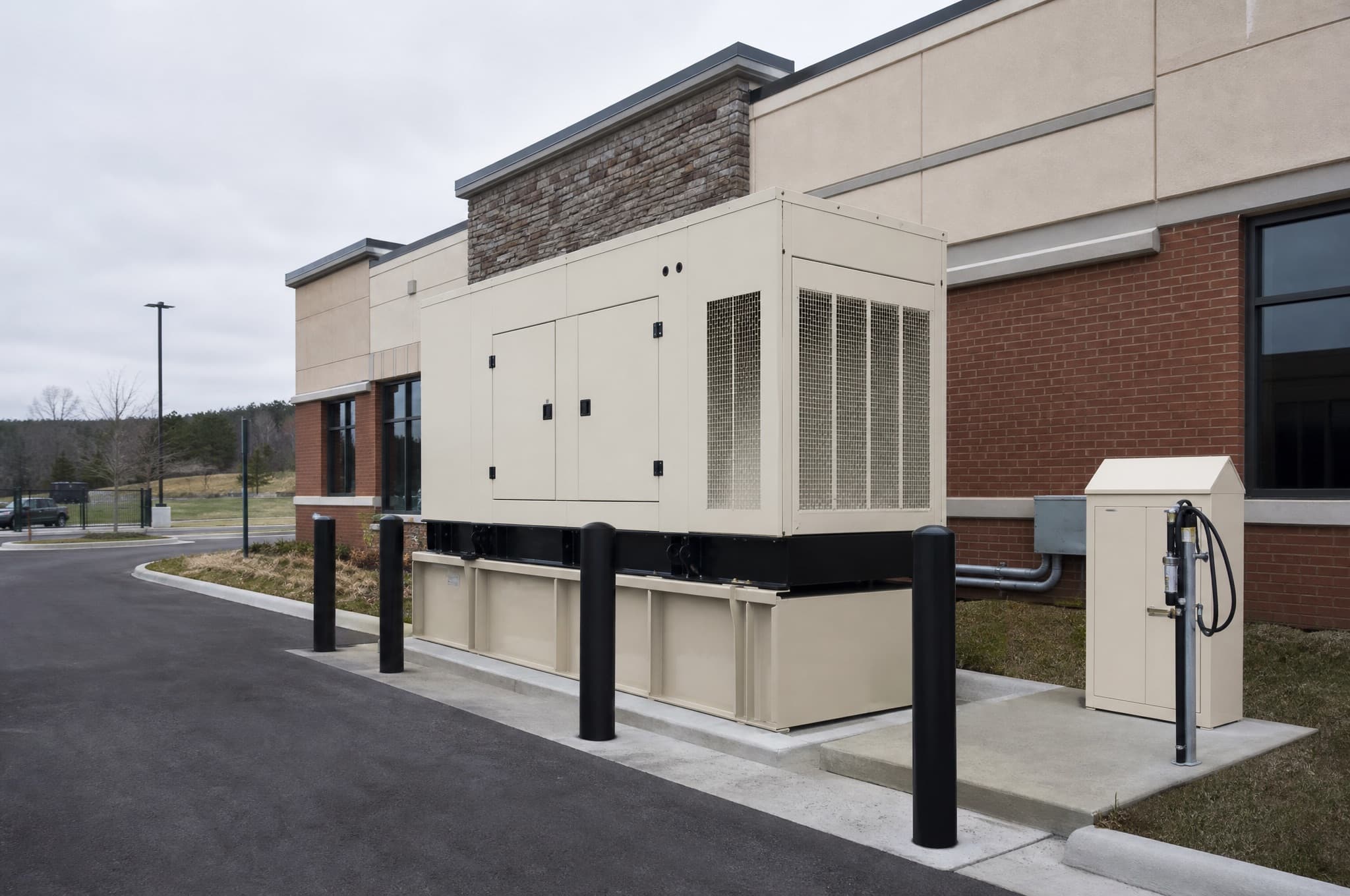
Building department. Structural pad, electrical, and the building permit that ties the rest together. For a generator tank, NFPA 110 and the generator's own requirements come into it.
Each reviewer needs a drawing that answers their questions. That is why the permit is a design problem first.
What to do first
You can save weeks by getting a few things straight before the design starts.
- Know what the tank serves. Generator, fleet, retail, heating, waste oil. It changes the code path.
- Know the product and the capacity you actually need, not the size the supplier has in stock.
- Get a site plan or survey, even an old one. Setbacks and property lines drive where an AST can go.
- Check whether the site already has registered tanks. A new tank can push a facility over a registration threshold.
- Do not order the tank yet. Tank listing, dimensions and fittings come out of the design, and reviewers reject tanks that do not match.
- If you have a contractor, loop them in early. If you do not, we can recommend one once the scope is defined.
Not sure where you stand? Send what you have.
A photo, the notice, or a sentence about the site is enough to start. Matt reviews it personally and comes back with the likely path.
What we do
Where permitting is required, it is integrated into the design process rather than treated as an afterthought.
Investigate. We confirm which agencies have jurisdiction over your site and what each one requires. We check existing registrations, look at the site, and identify anything about the location that will limit the design.
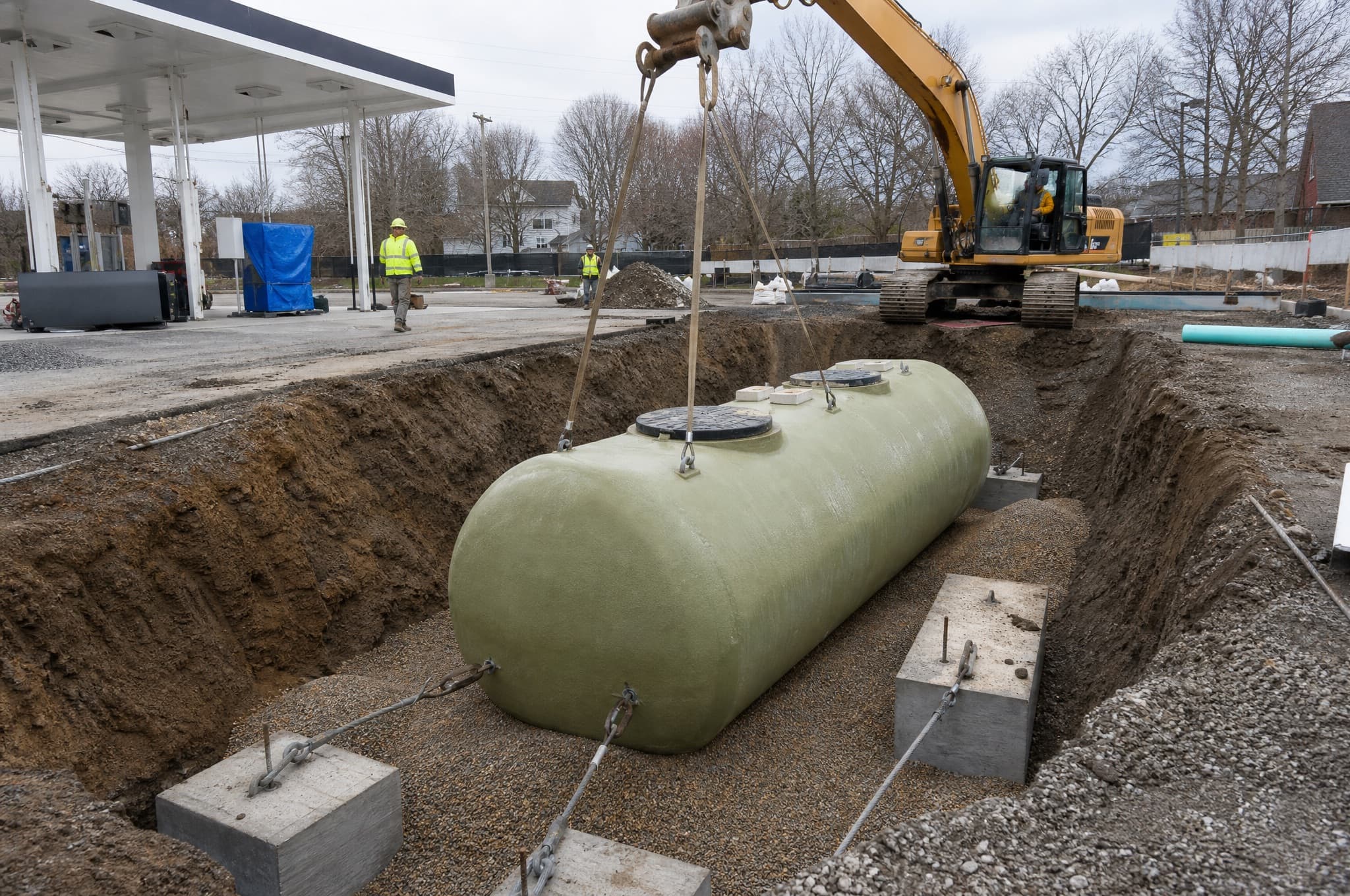
Develop the strategy. We settle the big decisions early: aboveground or underground, protected tank or vaulted, single tank or split, where it sits, how it is filled and vented, what containment and monitoring it needs. These are the decisions that reviewers question, so we make them on paper first.
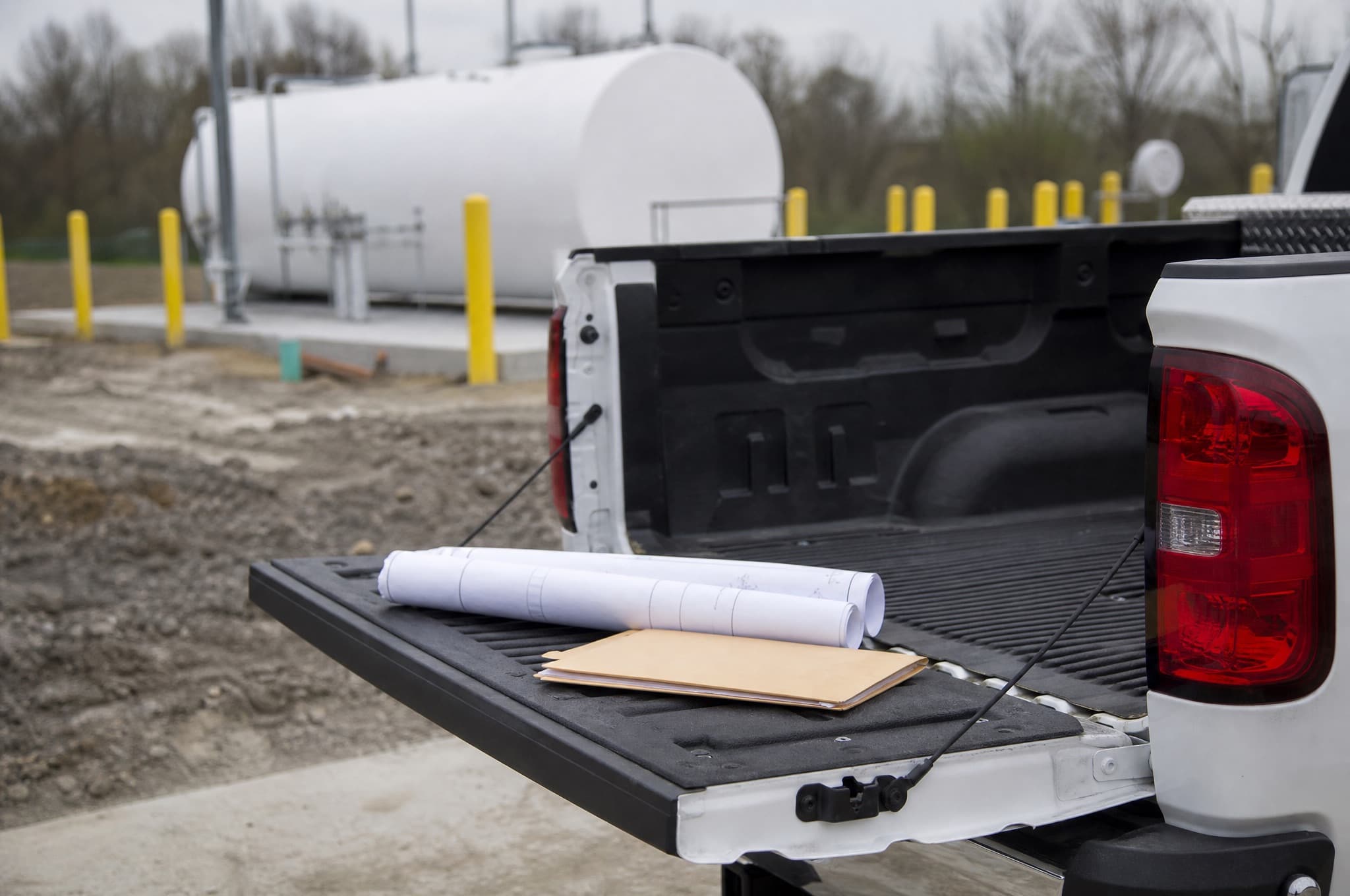
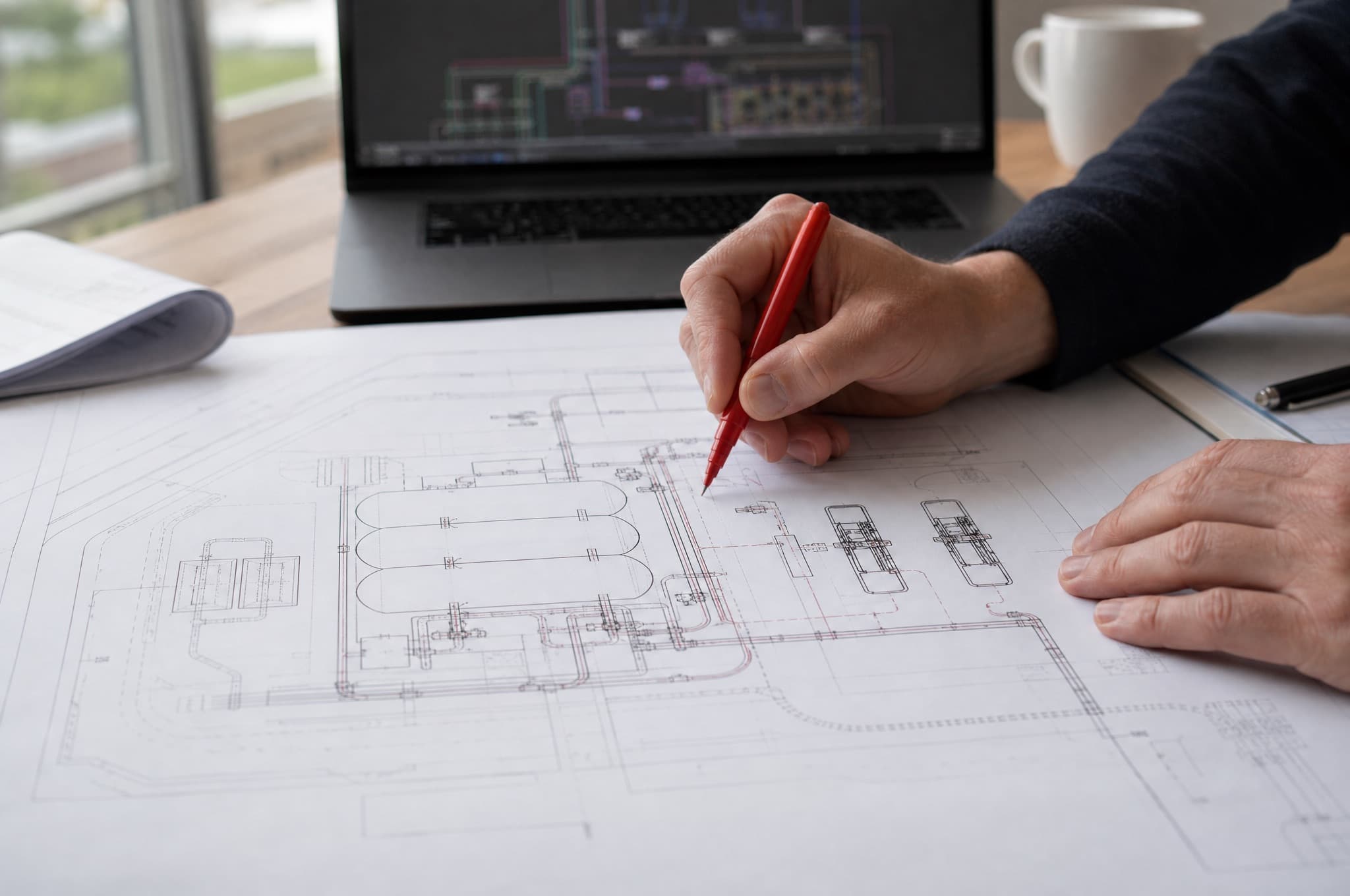
Design. We produce the drawings, equipment selections and specifications the reviewers need and the contractor can build from. Tank, piping, dispensing, containment, spill and overfill, leak detection, electrical interface, signage.
Permit. We prepare the applications, submit them, and respond to reviewer comments until the approvals are issued. Where a seal is required, the drawings are reviewed and sealed by an appropriately licensed design professional, coordinated by ZE through established professional relationships.
Support construction. Once the contractor is on site, we review submittals, answer field questions and confirm the installation matches the approved set.
Closeout. Final inspections, permit to operate, registration updates, and an as-built set for your file.
What drives cost
The permit fees themselves are set by each agency and are usually the smallest part. What drives the cost of getting a tank permitted is the design work behind it.
How many agencies are involved. A generator tank in Suffolk County touches more reviewers than the same tank in a rural Virginia county. Whether it is a UST or an AST. Underground systems carry more monitoring and testing design. Whether dispensing is included. Fueling adds NFPA 30A requirements, dispenser sumps, and often a fuel-management interface. Site constraints. A tight urban site with setback problems takes more design iterations than an open yard. Whether a PE seal is required, which depends on the agency and the scope. And whether there is existing work on the site that has to be brought into the permit.
The contractor's price is separate and usually the larger number. Our job is to make that number accurate by defining the system before it is bid.
Where this goes next
With approvals in hand, the project moves to construction. Because the design is already defined, you can get comparable bids from contractors who are pricing the same system, and we stay involved through installation and closeout.
If the reason you need a permit is that a tank already went in without one, that is a different path. See the unpermitted-tank pathway. If you need a permit as part of replacing an aging system, the replace-or-upgrade pathway covers the decisions that come before the permit.
Relevant services
The parts of the work this situation usually calls for.
Common questions
How long does a tank permit take?
It depends on the agencies involved and how complete the submission is. Health department and DEC reviews on Long Island are typically measured in weeks to months, and a submission that comes back with comments adds a cycle each time. A complete design package the first time is the single biggest factor in a shorter timeline.
Does a small generator tank really need a permit?
Usually yes. Fire code approval applies to almost any aboveground fuel tank, and county health department rules on Long Island cover petroleum storage at low thresholds. Whether it also triggers NYSDEC PBS registration depends on the aggregate storage at the facility. We check the actual thresholds for your site rather than guessing.
Can I get the permit myself and skip the design?
The permit application requires drawings and equipment information that reviewers will check against the code. Owners who submit without a design usually get a comment letter asking for exactly that. The design is what gets approved; the application is the cover sheet.
My contractor said they will handle the permit. Why do I need you?
Many good contractors do handle permits, and we work alongside them often. Where an owner benefits from us is when the design is not yet defined, when the agency is asking for drawings the contractor does not produce, when multiple agencies disagree, or when the owner wants an independent specialist who works for them and not for the installer. You can loop your contractor in, and we will coordinate directly.
Do you need a Professional Engineer's seal for the permit?
Some agencies and some scopes require a seal; many do not. ZE performs the fuel-system design and technical work directly. Reviewed and sealed by an appropriately licensed design professional when required by the applicable AHJ. ZE coordinates that review with appropriately licensed Professional Engineers through established professional relationships nationwide.
Start with what the tank serves and where it goes
Tell us what the tank is for, roughly how big, and where on the site. We will tell you which agencies are involved, what they will ask for, and what the path to an approved design looks like. No tank order needed yet.