
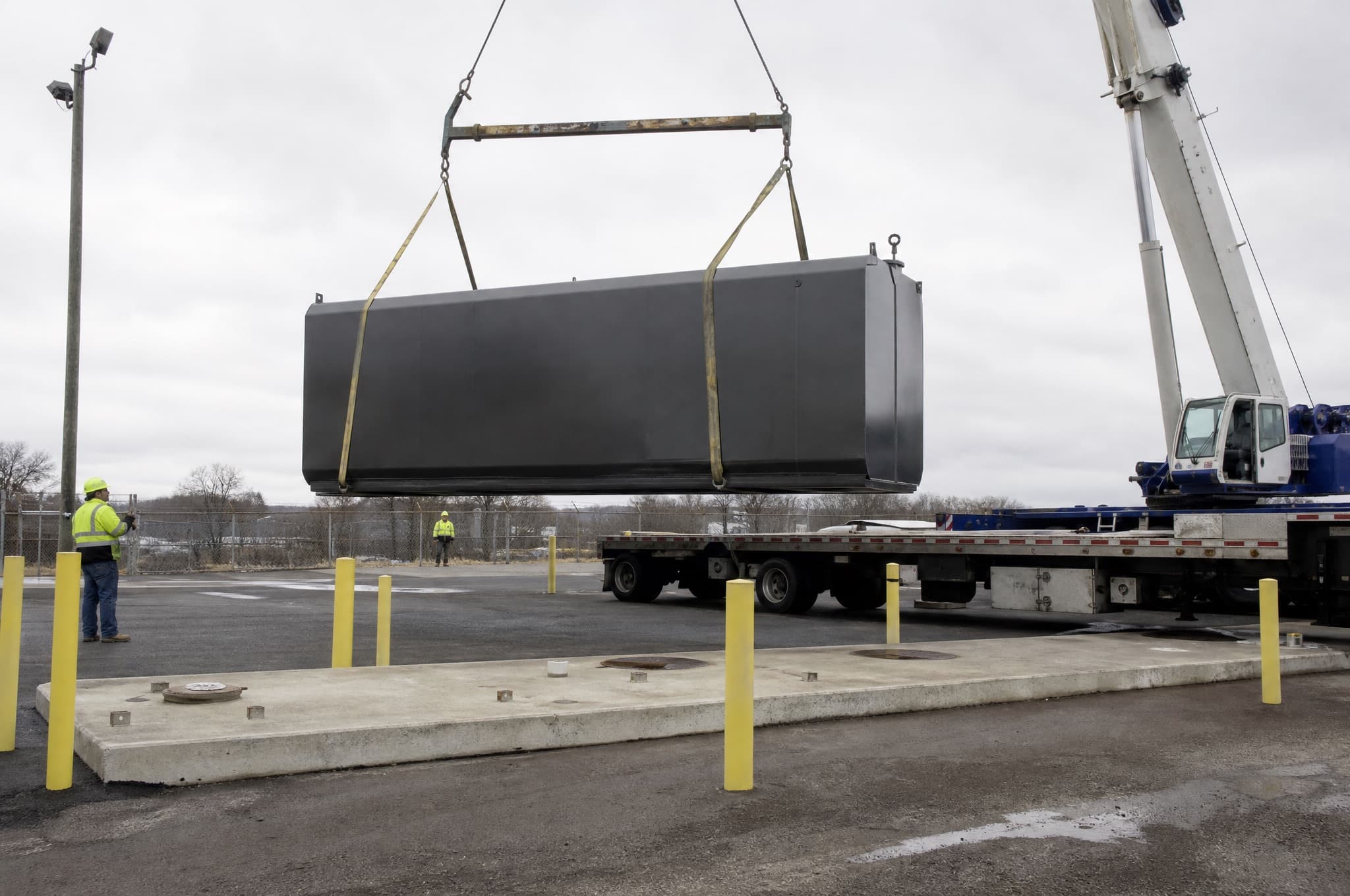
Moving or expanding? Your fuel tanks need their own plan.
"We're moving facilities and want to bring our tanks with us." "We need more fuel-storage capacity." "We just bought a building and it has tanks." These calls usually come from a fleet manager, a facilities director or an owner in the middle of a larger move, with the fuel system as one line on a long list. It is the line that most often holds up the schedule.
At a glance
Managing Member · B.S. Civil Engineering, Georgia Tech · 15+ years in fuel systems · Updated September 2026
What is usually going on is that the fuel system is treated as a piece of equipment when the agencies treat it as a new facility. A tank moved to a new address is a new installation at that address. A second tank at an existing site can push the facility over a registration threshold or into a different fire-code category. Tanks that came with a building carry whatever history they have. Each of those needs a design and approvals of its own, and the earlier they start, the less they hold up the move.
Who this applies to
- Fleet managers and municipalities relocating a fueling operation to a new yard or garage
- Contractors, landscapers and distributors moving to a larger facility and bringing their fuel tanks
- Owners adding tanks or capacity at an existing site to serve a bigger fleet or new equipment
- Companies leasing or buying a building that already has fuel, heating-oil or generator tanks
- Facilities directors coordinating a generator and its fuel tank as part of a larger construction project
- Architects and general contractors who need the fuel-system portion of a relocation designed and permitted
What is usually going on
Three situations, each with its own set of rules.
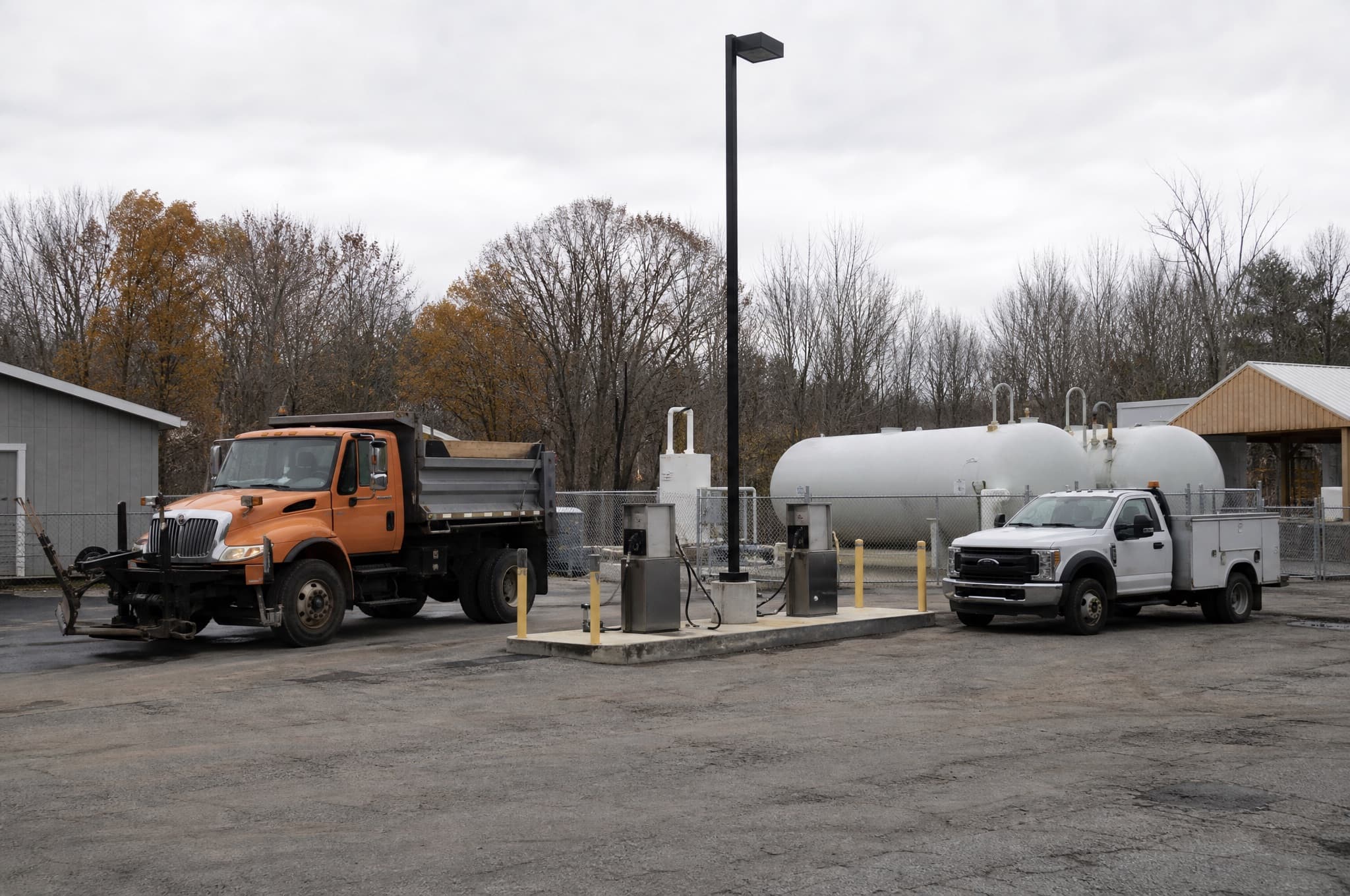
Relocating an existing AST. The tank itself may be reusable if it is listed, in good condition and matches what the new site's fire official and health department will accept. The new site still needs a full review: location and setbacks under NFPA 30 and NFPA 30A, containment, venting, impact protection, spill and overfill, dispensing, and a permit to construct and operate at the new address. The old site needs a proper closeout so your registration there does not linger. Some agencies will not accept a used tank without documentation of its listing and condition, and some tank types do not move well.
Adding capacity. A second tank or a bigger tank changes the facility totals. In New York, crossing 1,100 gallons aggregate brings NYSDEC Part 613 PBS registration into play if it was not already. County programs on Long Island have their own thresholds. Fire-code setbacks grow with tank size and can change which tank listing is required. An SPCC plan under 40 CFR 112 may be triggered or need amending at higher aggregate storage.
Tanks that came with the property. The prior owner's registrations, permits, test history and any open violations follow the site. Before you rely on those tanks, you need to know whether they were permitted, whether they are registered, when they were last tested, and whether they meet current code. Often they do not, and the move becomes a replacement project as well.
What to do first
- Bring the fuel system into the project schedule now. Permitting at a new site runs in weeks to months, and it cannot start until the location is designed.
- Get a site plan or survey of the new facility with property lines, buildings, drives and utilities.
- Pull the records on the tanks you plan to move: data plate, listing, age, capacity, last inspection, any drawings.
- If the new site already has tanks, find out what the agency has on file for that address before you close or sign the lease.
- Decide what the fuel system needs to do at the new site for the next decade, not just what it does today. Capacity, number of vehicles, products, fuel-management.
- Loop in your contractor or general contractor early. If you do not have a petroleum contractor, we can recommend one once the scope is defined.
Not sure where you stand? Send what you have.
A photo, the notice, or a sentence about the site is enough to start. Matt reviews it personally and comes back with the likely path.
What we do
Investigate. We review the tanks you have, the new site, and what each agency requires at that address. We check the file on any tanks already on the new property. We tell you early whether your existing tanks can move, whether they should, and what the new site can support.
Develop the strategy. Move the tanks, replace them, or add to them. Where they sit. Phasing, so fueling continues through the move if that matters. How the old site closes out.
Design. A full set for the new installation: tank placement and setbacks, containment, pad and protection, piping, dispensing, venting, spill and overfill, monitoring, electrical interface, fuel-management system, signage. Drawings the fire official, health department and building department can approve and the contractor can build from.
Permit. Permits to construct and operate at the new address, PBS registration or DEQ notification for the new facility, fire and building permits, and closure or deregistration paperwork at the old site. Where a seal is required, the drawings are reviewed and sealed by an appropriately licensed design professional, coordinated by ZE through established professional relationships.
Support construction. Bid review, submittal review, field questions, coordination with the general contractor and the rest of the project team, testing and startup.
Closeout. Final inspections, permit to operate, registrations in order at both addresses, as-builts for your file. An SPCC plan update if the new facility needs one.
What drives cost
Whether the existing tanks can be reused. A relocatable listed AST in good condition saves the tank cost but not the site work. Whether the new site needs a pad, containment, protection, canopy or electrical service the old one already had. Capacity and the number of tanks. Whether dispensing and a fuel-management system are part of the scope. Site conditions at the new address. Setback problems on a tight site can force a protected tank listing or a different location entirely. What is found on the new property. Existing tanks that need legalization, testing or closure add work. Closure of the old site, including UST closure if an underground tank is being abandoned. And the number of agencies involved, which is higher on Long Island and in New York City than in most of Virginia.
Our design and permitting work is a defined fee. The construction cost is the contractor's, and it is more accurate when they are pricing a complete design.
Where this goes next
A well-run relocation ends with the new facility permitted, registered and fueling on schedule, and the old site closed cleanly. If the move reveals that the existing tanks are not worth bringing, the replace-or-upgrade pathway covers that decision. If the new site is being built from scratch, the new-fueling-system pathway covers the ground-up design. If the tanks you inherited were never permitted, the unpermitted-tank pathway covers legalization.
Relevant services
The parts of the work this situation usually calls for.

Common questions
Can I just move my aboveground tank to the new site?
Physically, often yes. Regulatorily, a moved tank is a new installation at the new address. It needs a design, fire-code review for its location, health department or DEQ approval, and a permit to operate. The agency will also want to see the tank's listing and condition. We check the tank and the new site before you spend money on the move.
The building we bought has tanks. Are they our problem now?
Yes. The current owner or operator is responsible for the tank system as it exists. That includes registration, testing, and any violations or unpermitted work in the file. Before you rely on inherited tanks, find out what the agency has on record and what condition they are in. We do this review routinely for buyers and tenants.
Does adding one more tank really change anything?
It can. Aggregate capacity drives NYSDEC PBS registration and can trigger SPCC requirements. Tank size drives fire-code setbacks and sometimes the tank listing. County programs have their own thresholds. It is worth designing the total capacity you will need in one project rather than adding tanks one at a time and reopening the permit each time.
How early should the fuel system be in the move plan?
As soon as the new site is identified. The design cannot start until the location is known, and the permits cannot start until the design exists. A fuel system that enters the schedule late is the one that keeps trucks fueling at the old site for months after everything else has moved.
What happens to the old site?
It has to be closed out. Aboveground tanks are emptied, cleaned and removed with notice to the agency. Underground tanks go through closure under the applicable program, usually with sampling. Registrations are updated or closed. Leaving the old file open is a common source of a violation notice a year later.
Tell us where you are going and what you want to bring
Send the new site plan and photos of the tanks you have. We will tell you whether they can move, what the new address will require, and how to get the fuel system permitted on the same schedule as the rest of the move.