
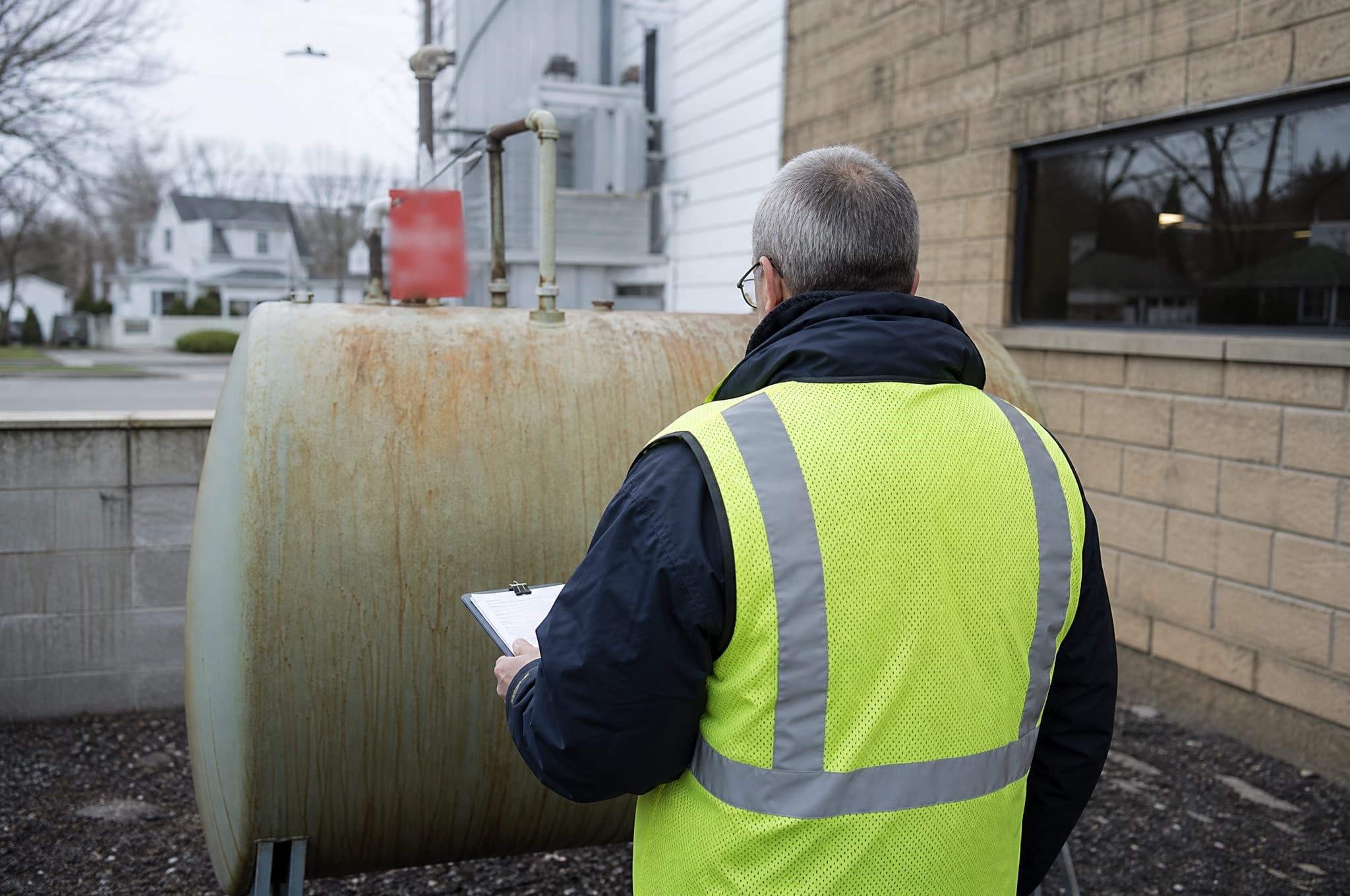
You received a tank violation. Here is what happens next.
A notice of violation on a fuel tank usually arrives the same way. An inspector visits, or a report comes due, and a letter follows with a list of items and a response deadline. The owner reads it and does not know which items are serious, which are paperwork, and who is supposed to fix what. We have worked through this situation many times with gas stations, fleet yards, repair shops, generator owners and property managers.
At a glance
Managing Member · B.S. Civil Engineering, Georgia Tech · 15+ years in fuel systems · Updated September 2026
Here is what is usually actually going on. Most tank violations are not about a leak. They are about missing or expired registrations, a test that was not performed or not documented, a spill bucket or overfill device that failed, a sump with water in it, monitoring records that were never kept, or equipment that was changed without the agency being told. Each of those has a defined fix. The job is to sort the list, get the right corrective path in front of the agency, and close the file in writing.
Who this applies to
- Gas station and convenience store owners with a notice from SCDHS, NCDH, WCDOH, NYSDEC or a local fire marshal
- Fleet managers and municipalities cited on a fueling yard, highway garage or transit facility
- Repair shops and dealerships cited on waste-oil, motor-oil or lubrication storage
- Property managers with a generator or heating-oil tank flagged during an inspection or a sale
- Owners in Virginia with a DEQ notice on a UST under 9VAC25-580 or an AST under 9VAC25-91
- Contractors' customers who were told the violation needs a design or a permit before the work can start
What is usually going on
A violation notice is a list of items the agency believes are out of compliance with a specific rule. In Suffolk County that is usually SCDHS Article 12. In Nassau it is Article XV of the Nassau County Public Health Ordinance, the county's petroleum bulk storage program. In Westchester it is Article XXV. Anywhere in New York with more than 1,100 gallons of aggregate storage, NYSDEC Part 613 is in play. In Virginia it is DEQ under 9VAC25-580 for USTs and 9VAC25-91 for ASTs, plus the Statewide Fire Prevention Code through the fire official.
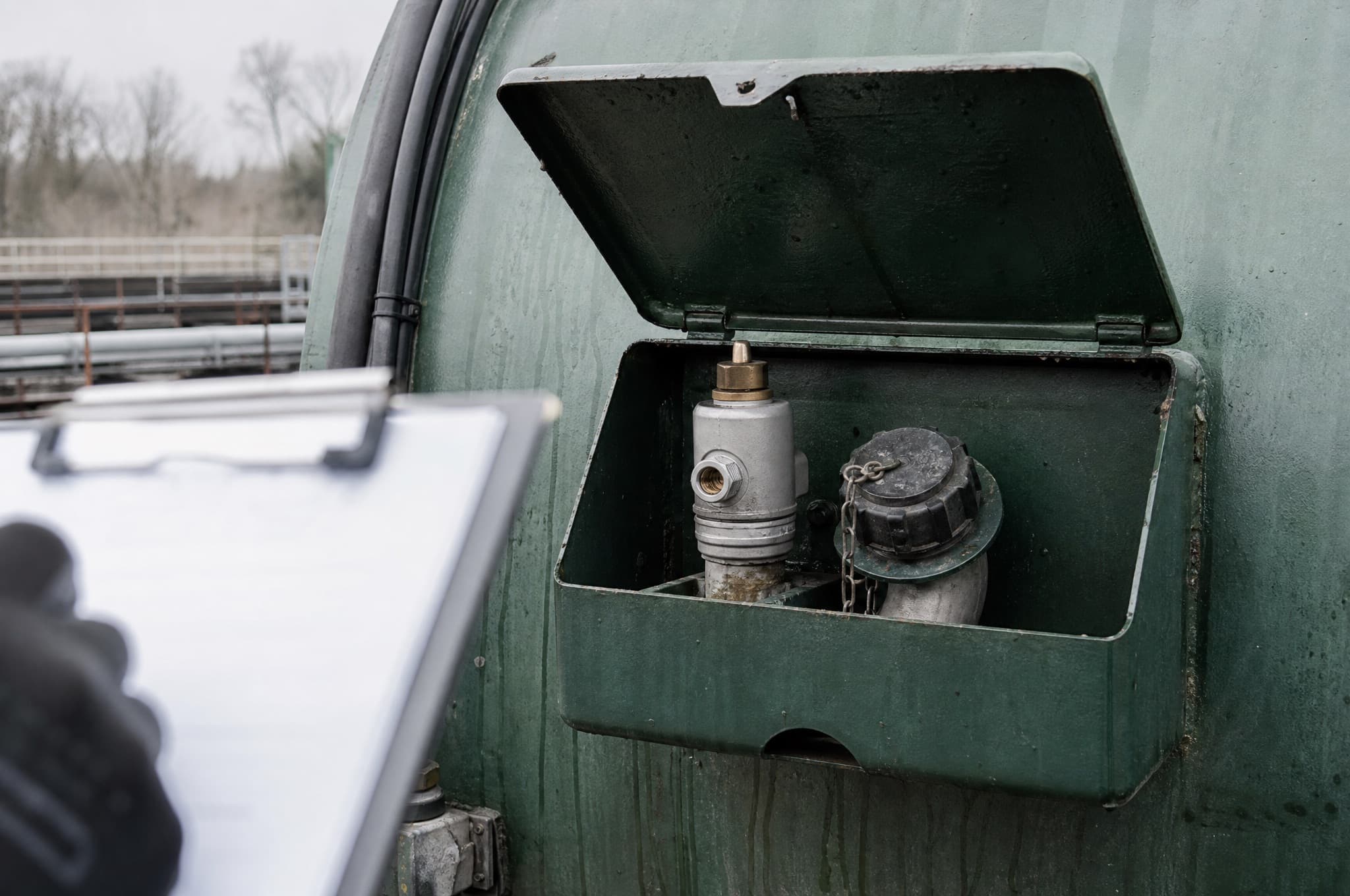
The items on the notice tend to fall into a few buckets. Registration and paperwork: an expired PBS registration, a tank that was never registered, a change in ownership or equipment that was never reported. Testing and monitoring: a tightness test, cathodic protection test, line leak detector test, or overfill and spill-bucket test that is overdue or undocumented. Equipment: a cracked spill bucket, a failed overfill prevention valve, a sump with liquid in it, a dispenser sump without a sensor, a vent or fill that does not match the approved drawing. Unpermitted changes: a tank, dispenser, piping run or fuel-management system that was installed or modified without the agency's approval.
Some notices also carry an operational order. Stop using a tank. Remove product. Stop dispensing. Those need to be read first because they change what you can do today.
What to do in the first 48 hours
Do not ignore it and do not over-respond. Both make the file bigger. The first two days are about reading, preserving and lining up the right people.
- Read the notice twice. Find the response deadline, the rule cited for each item, and any order to stop using equipment. Note the inspector's name.
- Do not remove, repair or replace anything that is cited until you know whether the agency wants to see it first or wants a permit before the work.
- Gather what you already have: PBS registration, prior test reports, the last inspection, tank and dispenser drawings, the fuel delivery log, ATG printouts.
- Photograph the cited items as they are now. Fill, vent, dispensers, sumps, spill buckets, tank pad, containment, signage.
- Loop in your contractor if you have one. If you do not, we can recommend one. Either way, the corrective work usually needs a defined scope before anyone prices it.
- If the notice includes a stop-use order or refers to a release, follow it and call the agency contact the same day. Then call us.
Not sure where you stand? Send what you have.
A photo, the notice, or a sentence about the site is enough to start. Matt reviews it personally and comes back with the likely path.
What we do
We take the notice and turn it into a defined path to a closed file. The steps are the same ones we use on every project, adapted to a violation.
Investigate. We read the notice against the actual rule, review your records, and look at the system on site or through your photos. We separate the items that are paperwork from the items that need physical work, and we identify anything the inspector missed that will come up on the re-inspection.
Develop the compliance strategy. Some items close with a document. Some close with a test. Some close with a repair. Some need a permit before the repair. We lay out which is which, in what order, and what the agency needs to see for each.
Design. Where equipment has to change, we produce the drawings and equipment selections the agency and the contractor both need. Spill bucket and overfill replacements, sump replacements, containment corrections, piping or dispenser changes, or a full tank replacement if the system is not worth saving.
Permit. Corrective work often needs a permit to construct, or an amended permit to operate, from the same agency that issued the violation. We prepare and submit it and respond to the reviewer's comments.
Support construction. We are available to the contractor for field questions, review submittals and testing, and confirm the work matches what was approved.
Closeout. We assemble the test results, photos, as-built drawings and registration updates and submit the response package. The goal is a letter or an inspection record that says the items are resolved.
What drives cost
We do not quote a violation from the notice alone, because the notice does not tell you how much physical work is behind it. What drives cost is straightforward.
How many items are paperwork versus construction. A registration update and a test report cost far less to close than a sump replacement. Whether a permit is required before the fix, which adds design and agency review. Whether the cited equipment can be repaired or has to be replaced, and whether replacing one component reveals others that no longer meet current rules. Whether the agency has issued a stop-use order, which puts the schedule ahead of everything else. And how well the site is documented already. Missing drawings and records take time to reconstruct.
The contractor's construction cost is separate from our design and compliance work. Our part is defining the scope clearly enough that the contractor prices the same thing the agency is expecting.
Where this goes next
Most violations close in one of three ways. A paperwork response, where the agency accepts documents and tests and closes the items. A corrective repair, where equipment is replaced under a permit and the agency re-inspects. Or a system replacement, where the notice is the point at which an older tank system is no longer worth patching and the owner decides to design a new one.
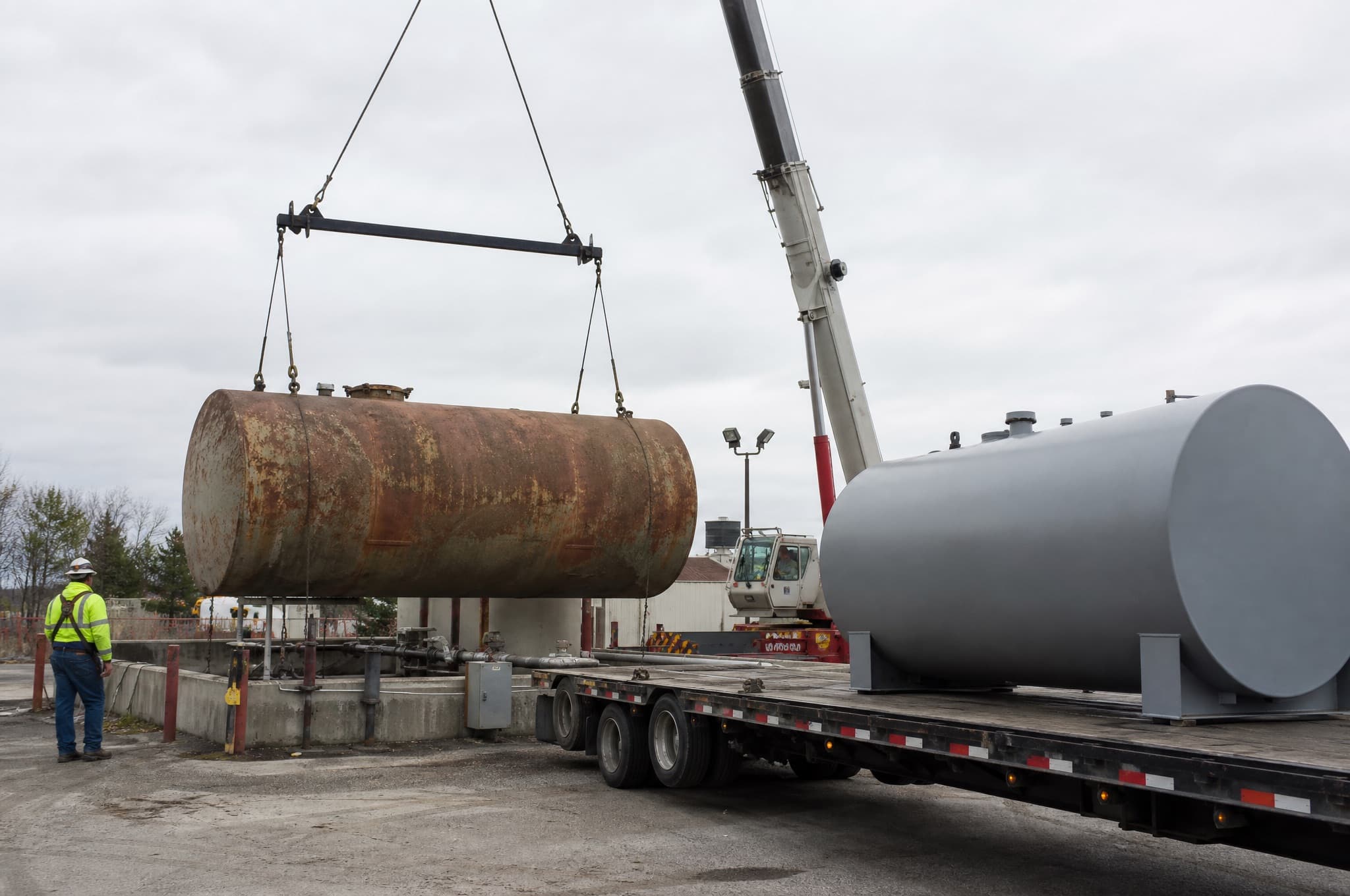
If you are in that third group, the violation becomes the start of a replacement project. That is covered on the replace-or-upgrade pathway. If the notice is about a tank that was installed or changed without a permit, the unpermitted-tank pathway walks through legalization. If you are not sure which situation you are in, send us the notice and we will tell you.
Relevant services
The parts of the work this situation usually calls for.
Common questions
How long do I have to respond to a tank violation?
The notice states the response window. Many agencies use 30 days, but some use less, and a stop-use order is effective immediately. Read your notice for the actual date. If the date is close, contact the agency in writing before it passes and tell them you are preparing a response. Silence is what escalates a file.
Do I need to stop using the tank?
Only if the notice says so, or if the violation involves a suspected release. Most equipment and paperwork violations do not carry a stop-use order. If yours does, follow it. Operating a tank the agency has ordered out of service turns a correctable violation into an enforcement case.
Can my contractor just fix the items?
Sometimes. Simple component swaps under an existing permit can often go straight to the contractor. Many corrections need a permit or an amended approval first, and the agency wants to see drawings before work starts. If the contractor fixes it without the permit, you can end up with a second violation for unpermitted work. We sort out which items need what, and we work alongside your contractor or recommend one.
Will the agency fine me?
It depends on the agency, the items and the history of the site. Many first notices are corrective and do not carry a penalty if the owner responds on time and closes the items. Repeat violations, ignored deadlines and releases are where penalties show up. A prompt, organized response is the best protection.
The violation is on a tank I did not install. Am I still responsible?
In most programs the current owner or operator is responsible for the tank system as it exists today, regardless of who installed it. That includes tanks that came with the property. The good news is that the corrective path is the same. Document what is there, correct what has to be corrected, and get the registration into your name.
Do you work in my county?
Zambrano Enterprises supports facilities nationwide. The heaviest concentration of our violation work is in New York, particularly Suffolk, Nassau and Westchester counties, New York City and the Hudson Valley, where each county program has its own forms and habits and we know them. The federal rules under 40 CFR 280 are the same everywhere, and where professional engineering review or certification is required, ZE coordinates with appropriately licensed Professional Engineers through established professional relationships nationwide.
Send us the notice
Email the violation and a few photos of the tank. We will tell you which items are paperwork, which need work, whether a permit is involved, and what the path to a closed file looks like. Matt reads every notice himself.