
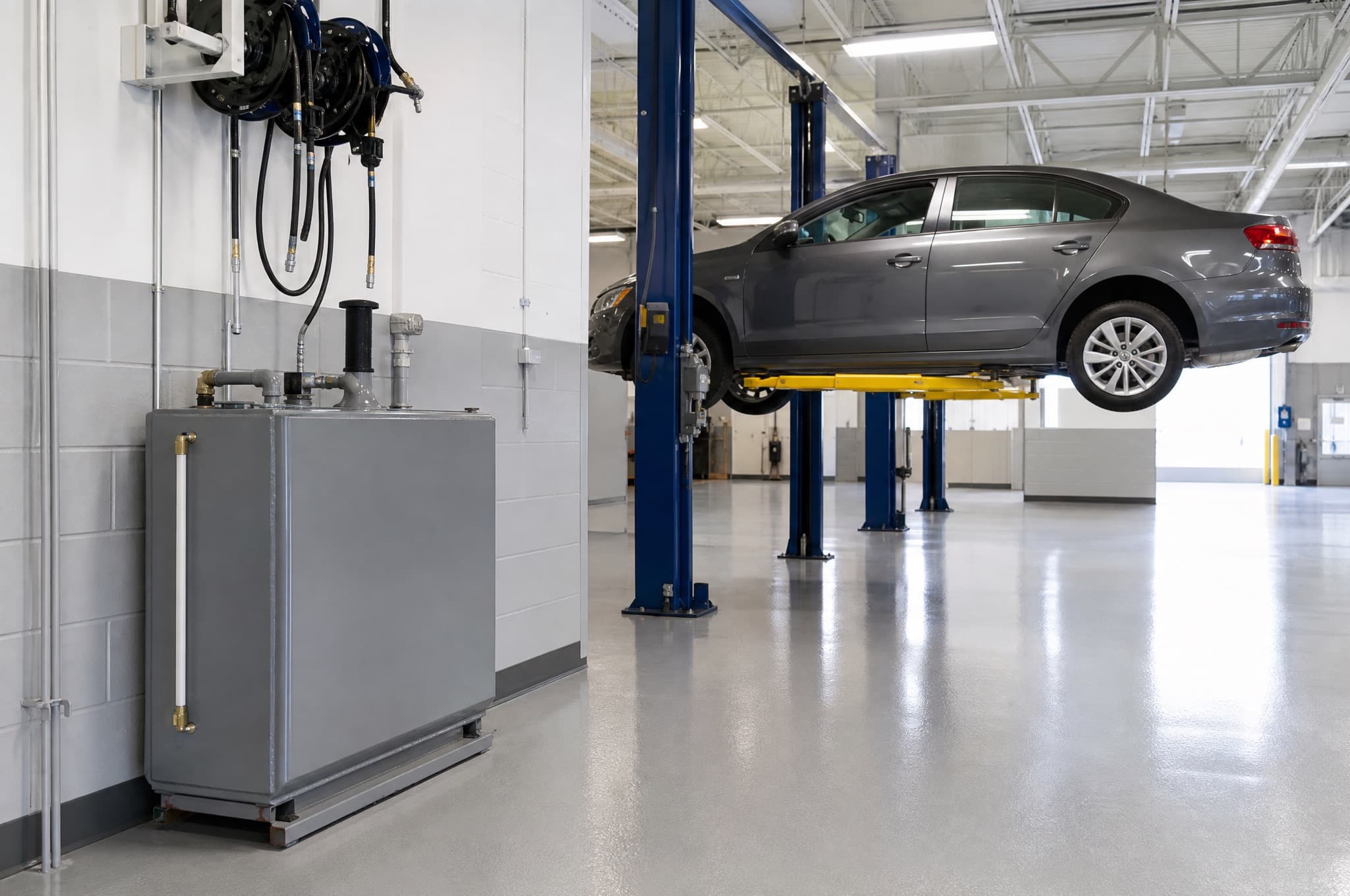
Waste-oil and motor-oil storage at shops, permitted and correct
Dealerships, repair shops and quick lubes store more petroleum than they think. ZE designs, permits and corrects the tanks that keep a service department running.
If you manage a service department or own a repair shop, take an inventory. Bulk motor-oil tanks in the parts room or on a mezzanine, a waste-oil tank behind the building or in a corner of the shop, ATF and gear-oil totes, a pallet of drums, maybe a waste-oil heater. Most of it was installed by the lubricant distributor or by a previous owner. Very little of it has a permit file, and the aggregate is usually larger than anyone has added up.
The problem shows up at inspection or at sale. A county health inspector under Suffolk Article 12 or the Nassau County storage ordinance walks the shop and writes up an unregistered tank, a waste-oil tank with no overfill protection, no secondary containment, no spill container at the remote fill, or no inspection records. In New York, waste oil is petroleum under NYSDEC Part 613 and counts toward the registration threshold. A buyer's due diligence on a dealership finds a waste-oil UST nobody knew about. The fire marshal wants the tank out of the bay.
Shop tanks are small systems, and small systems get built by whoever delivers the oil. That is how a tank ends up with a gauge but no overfill valve. A short design package settles tank listing, containment, fill and vent, gauging, location and permits before the tank arrives, and a permit at installation is far cheaper than legalizing the tank after a notice. For a dealership renovation or new build, ZE coordinates the lubrication and waste-oil storage with the architect so it is on the permit drawings rather than added afterward.
Typical projects
- New waste-oil AST with overfill protection, secondary containment and a permitted remote fill
- Bulk motor-oil and lubrication storage systems for dealership service departments
- Legalization of waste-oil or motor-oil tanks installed by a supplier or previous owner without a permit
- Correction of violations issued after a county health or fire inspection at a repair facility
- Replacement of an aging waste-oil UST with an aboveground tank
- Closure of abandoned waste-oil or gasoline USTs found during a property sale or renovation
- Fuel and lubrication storage for new dealership construction, coordinated with the architect's permit set
- PBS registration and county permits for multi-site service groups
What has to be settled in design for automotive repair and service facilities.
Authorities that typically have jurisdiction
- NYSDEC (Part 613 Petroleum Bulk Storage)
- SCDHS Article 12, the NCDH storage ordinance or WCDOH Article XXV
- Local fire marshal and building department
- NYC DOB and FDNY inside the five boroughs
- VA DEQ (9VAC25-91 and 9VAC25-580) and the local fire official
- Outside these jurisdictions, the state, county and local authorities having jurisdiction at the project site
Jurisdiction varies by site, tank size and product. ZE confirms the applicable authorities during permit due diligence.
Waste oil is petroleum to the regulator
NYSDEC Part 613 treats waste oil as petroleum, so a waste-oil tank counts toward the 1,100-gallon aggregate that typically triggers registration in New York, and the county programs in Suffolk, Nassau and Westchester regulate it as well. In Virginia, DEQ's AST regulation 9VAC25-91 applies to tanks at regulated facilities, with registration, pollution prevention and contingency plan requirements varying based on the capacity of the individual tank and the facility's aggregate storage capacity. Used-oil management standards under 40 CFR 279, and 6 NYCRR Part 374-2 in New York, add labeling and handling rules on top of the tank rules.
Overfill protection at the fill point
Waste-oil tanks are filled from drain carts and transfer pumps, not by a delivery driver watching a gauge, so the fill side is where inspectors look first. An overfill prevention valve or high-level alarm matched to the fill method, a spill container at the remote fill, a visible gauge and a lockable fill cap are the usual corrections. Whether that work needs a modification permit varies by county.
Class IIIB liquids still get regulated
New motor oil and most used oil are typically Class IIIB liquids, and NFPA 30 and the fire code relax some requirements for them. AHJs still regulate tank location, quantities per control area indoors, containment and separation, and a used-oil tank contaminated with gasoline or solvent can be treated differently. Confirm the classification with the AHJ rather than assume the relaxed rules apply.
Inside the shop or outside the wall
An indoor tank needs a listed double-wall tank or listed containment, venting to the outdoors, clearance from ignition sources and, depending on quantity and the AHJ, a rated room. An outdoor tank needs vehicle impact protection, weather protection for the fill and gauge, and containment. Waste-oil heaters carry their own listing and clearance requirements. The right answer depends on the building, the lot and the fire marshal.
Drums and totes count too
Containers of 55 gallons or more count toward the SPCC aggregate under 40 CFR 112, and drum and tote storage can push a shop past registration thresholds it did not know it was near. Drum pallets with built-in containment, a defined storage area and a simple inventory are usually enough, but they need to be in the file.
Property transactions find every tank
Dealership sales and refinancing bring environmental due diligence, and due diligence finds tanks. Registering and permitting existing tanks, and properly closing the ones no longer in use, before a transaction keeps the finding from becoming a closing condition.
Where ZE fits on a automotive repair and service facilities project.
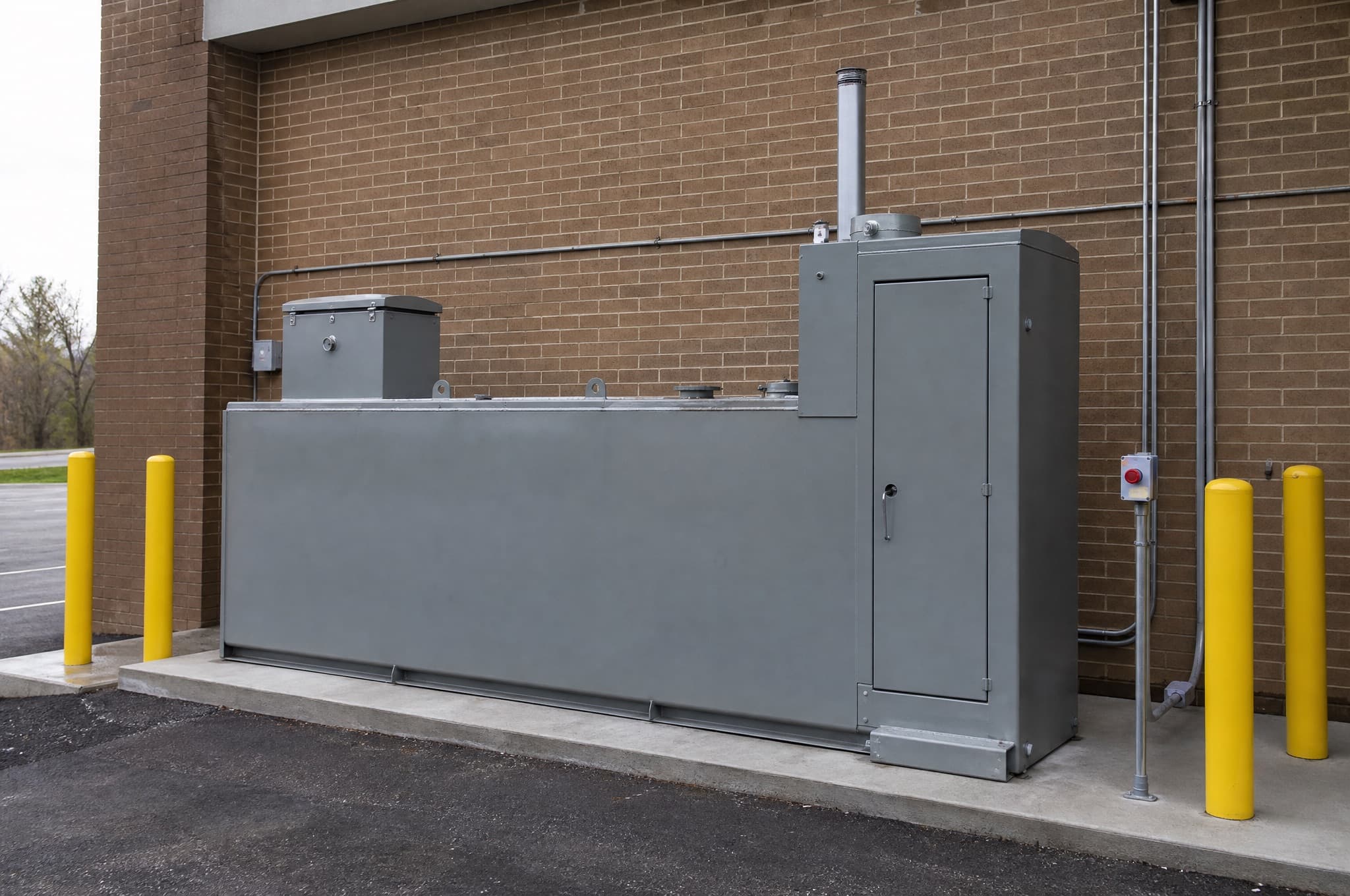
AST System Design
Aboveground storage tank systems for fuel, fuel oil, waste oil and generator diesel, sized and sited to fire code and AHJ requirements.
Fuel Tank Permitting
Permit due diligence and approvals from every authority having jurisdiction, handled as part of the design rather than an afterthought.
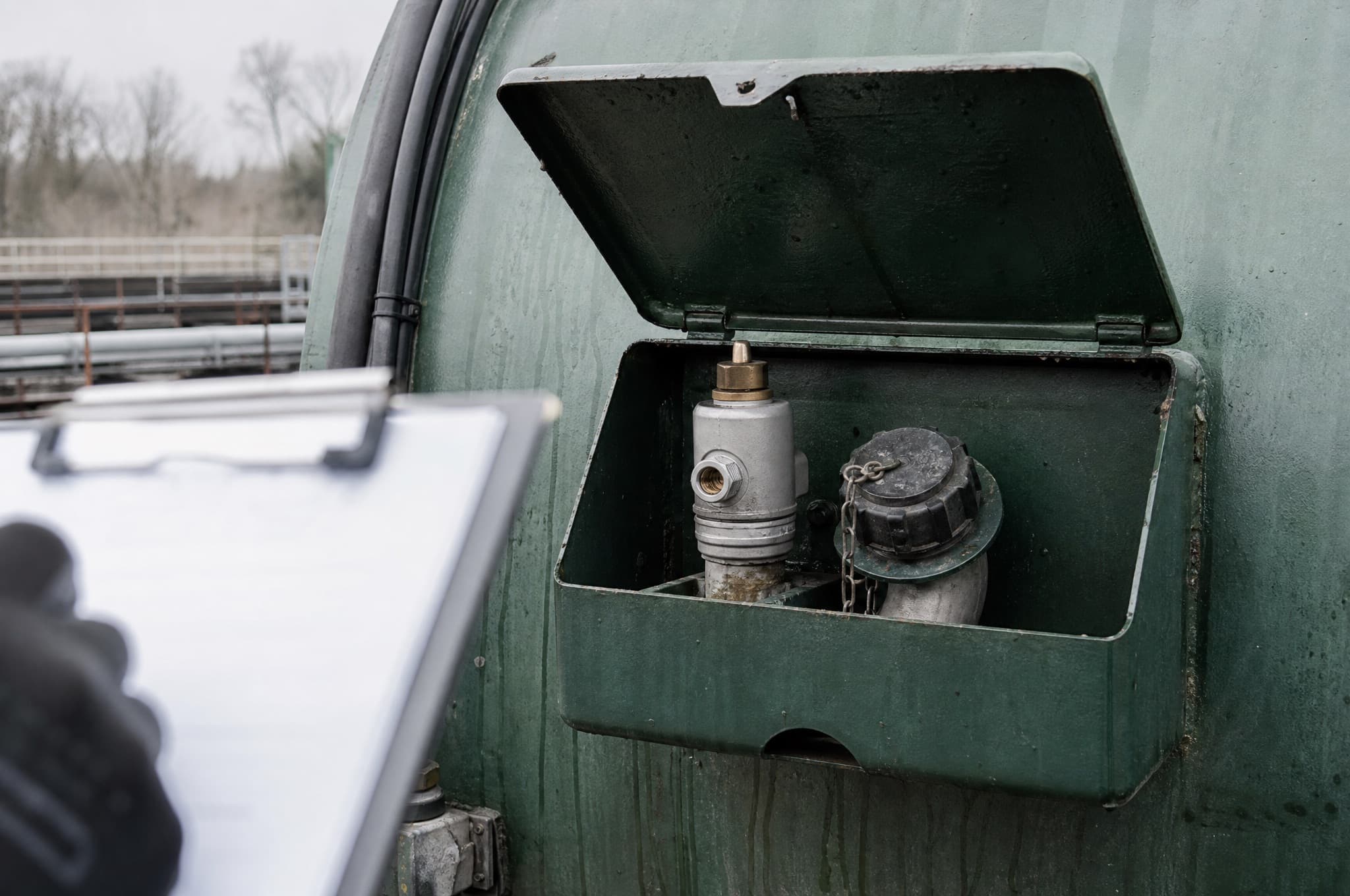
Compliance and Violation Resolution
Petroleum storage violations, unpermitted installations, failed tests and occupancy holds resolved with a defined corrective path.
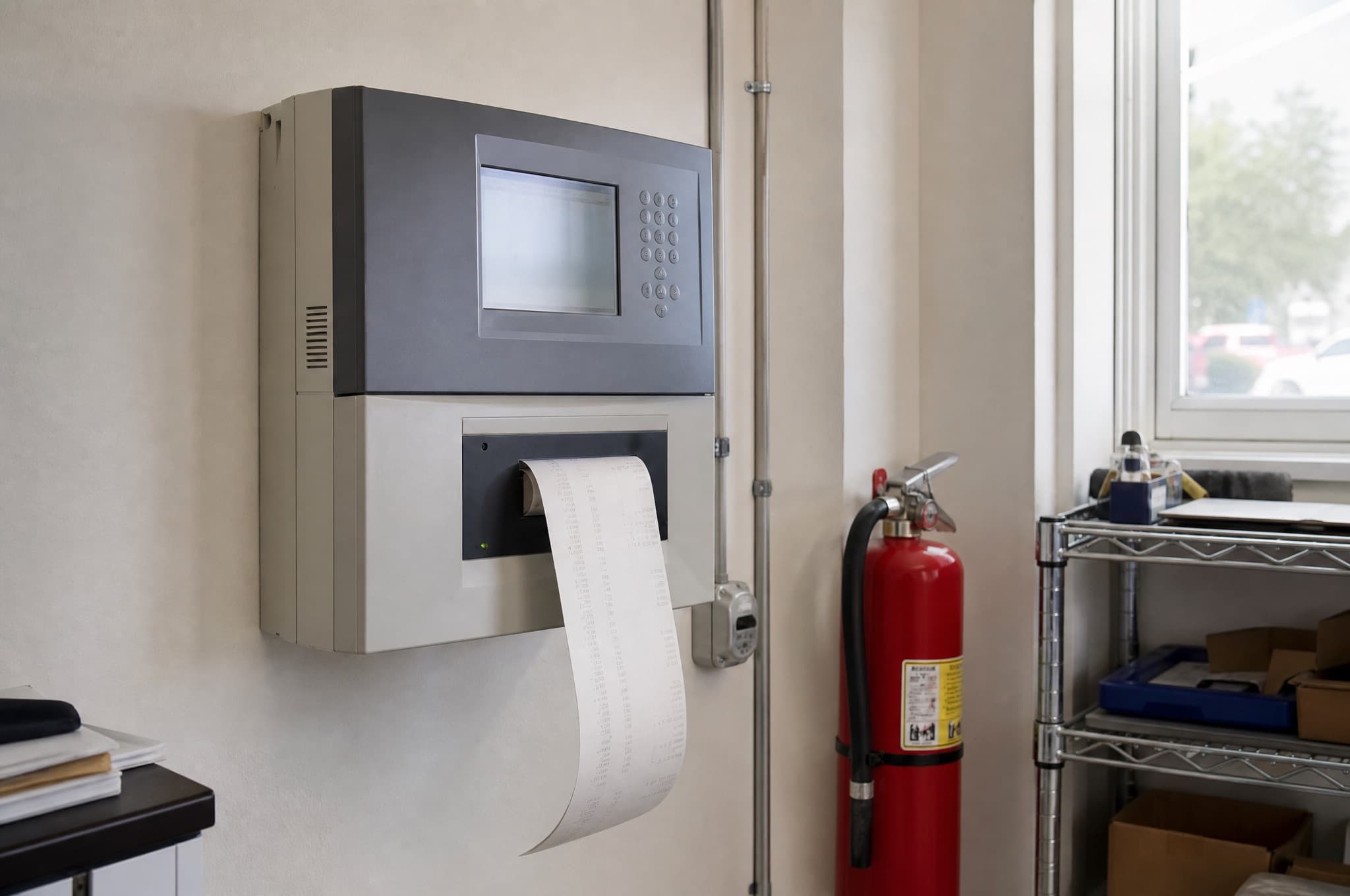
PBS Registration and Renewal
NYSDEC Petroleum Bulk Storage registrations, renewals and modifications kept current and accurate.
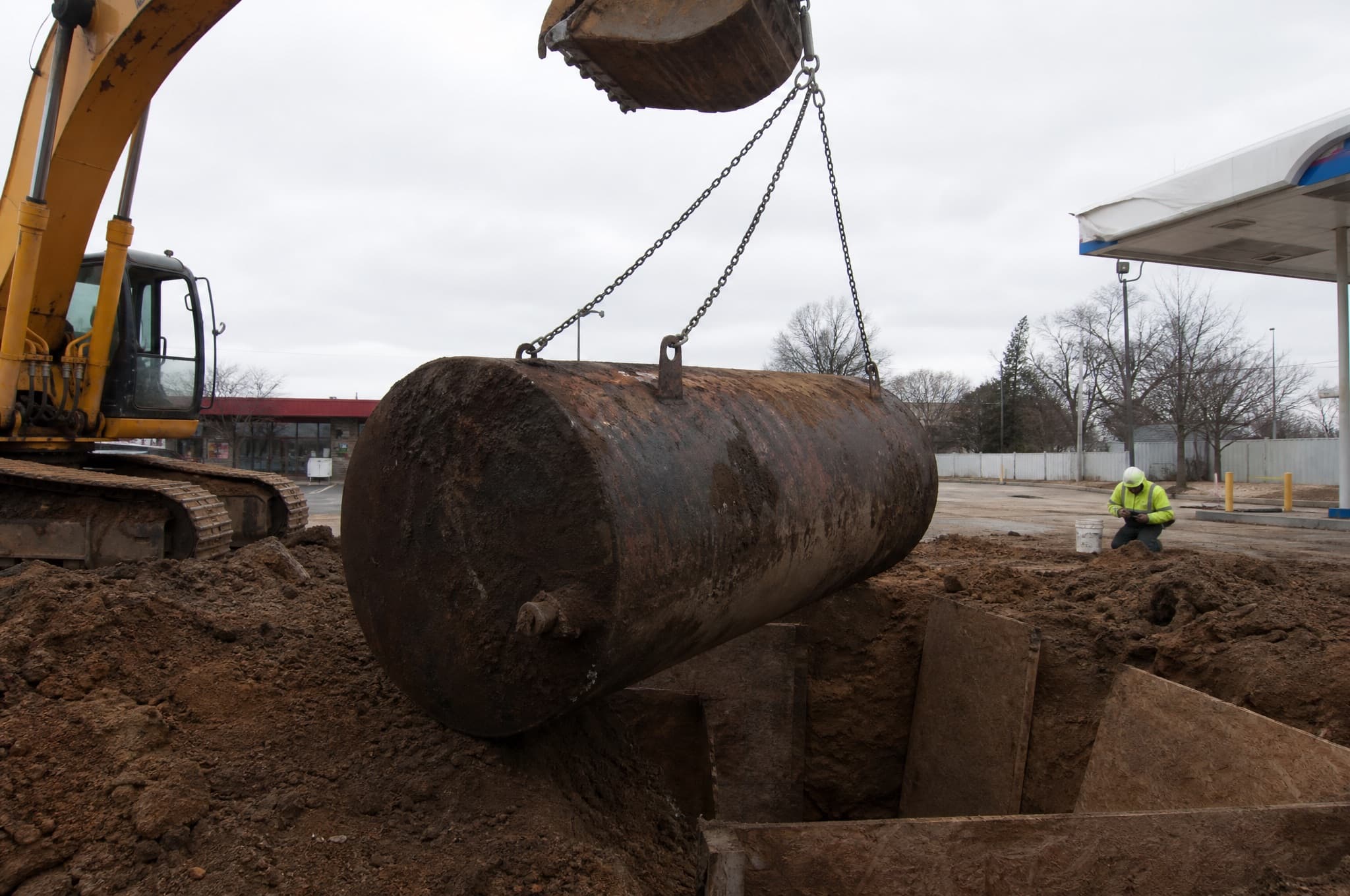
Tank Closure and Decommissioning
UST and AST closure planning, agency notification and deregistration with a clean file at the end.
Start with your situation
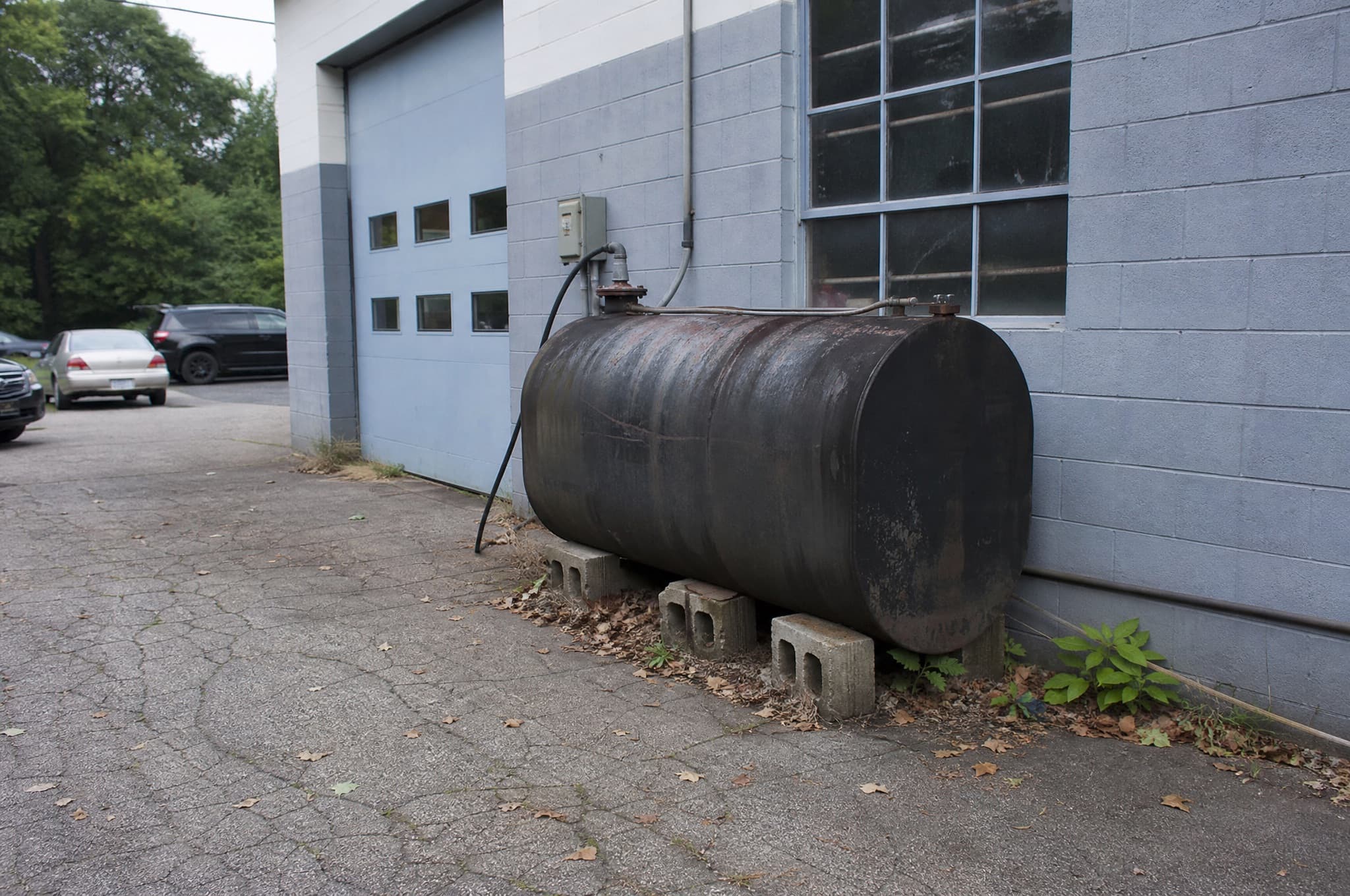 I installed or modified a tank without a permitLegalizing an existing installation before it becomes a violation.
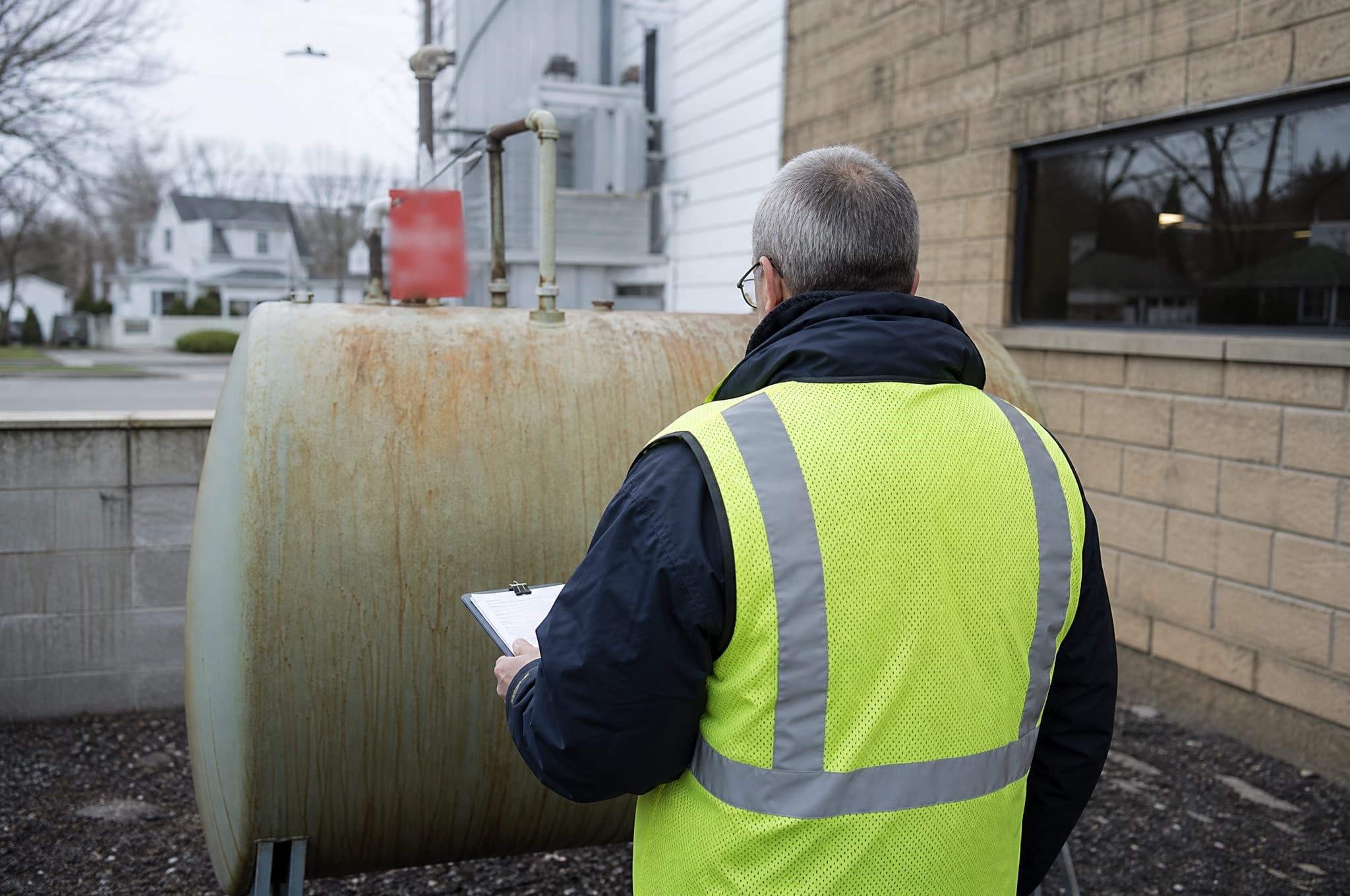 I received a tank violationA notice from the county health department, DEC, DEQ or fire marshal.
 I need a tank permitA new AST or UST, a modification, or an approval the AHJ is asking for.
About automotive repair and service facilities.
Not answered here? Ask directly.
Talk to a Fuel-System SpecialistDoes a 500-gallon waste-oil tank at our shop need a permit?
Assume yes until it is checked. In Suffolk, Nassau and Westchester, county petroleum storage rules reach tanks well below the NYSDEC registration threshold, and the fire code operational permit the local fire marshal issues can apply at lower quantities still. In Virginia the answer depends on aggregate storage at the site and the local fire official. ZE checks the applicable rules for your address and tells you what applies.
Our oil supplier installed the tank. Aren't they responsible for the permit?
The owner or operator of the facility holds the permit and registration obligation, and the notice of violation comes to you. The supplier may have installed a listed tank correctly. The permit is still yours, and correcting the file now is usually straightforward.
We were cited for no overfill protection on the waste-oil tank. What does the fix look like?
Typically an overfill prevention valve or high-level alarm sized to how the tank is actually filled, a spill container at the fill, a working gauge and the documentation the inspector asked for. Depending on the county, the change may require a modification permit before the work. ZE designs the correction, submits it and closes out the violation.
Can the waste-oil tank stay inside the shop?
Often, with conditions that vary by AHJ: a listed tank with secondary containment, a vent to the outdoors, quantity limits for the space, clearance from the bays and heaters, and sometimes a rated enclosure. When the conditions cannot be met, the tank moves outside with containment and impact protection.
We are buying a dealership that has an old waste-oil UST. Keep it or close it?
It depends on the tank's construction, test history, registration status and whether the service department needs it. Many older shop USTs are better closed and replaced with an aboveground tank. ZE evaluates the tank, lays out both paths with the applicable closure rules and handles the permits either way.
Send us the situation. We'll tell you the path.
Photos, a violation notice, an inspection report, or just a description of the site. Matt reviews every inquiry personally and comes back with a clear next step.