
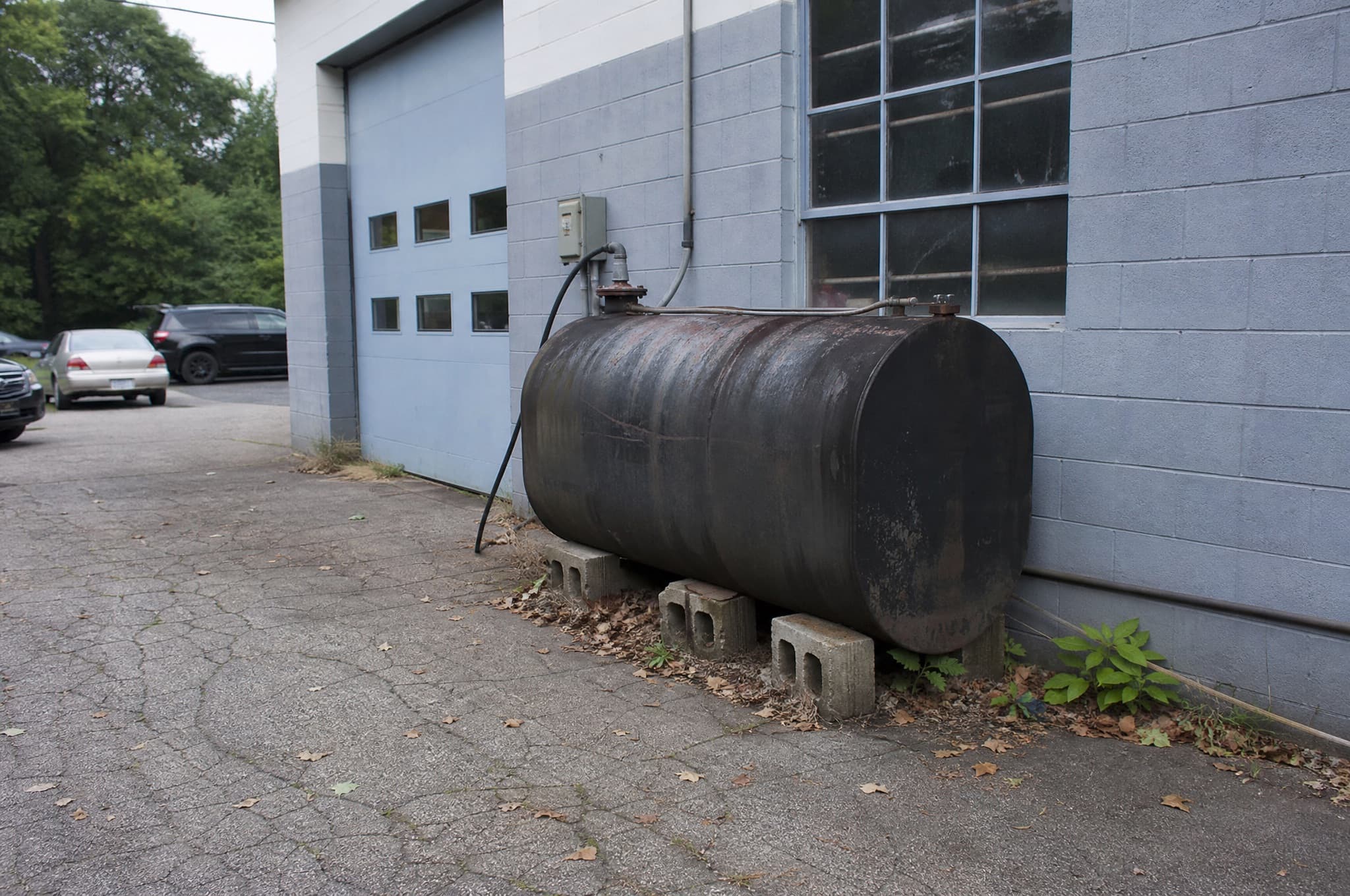
Existing and unpermitted fuel tank legalization
An unpermitted tank is a fuel tank that was installed, relocated or modified without the permits and registrations the authority having jurisdiction requires. It usually comes to light one of three ways: a buyer's due diligence, an inspection, or a new project that puts the existing tank in front of a plan reviewer for the first time. Often the current owner did not install it. A prior owner did, or a contractor skipped the permit, or the tank was permitted once and then modified without anyone filing.
At a glance
Managing Member · B.S. Civil Engineering, Georgia Tech · 15+ years in fuel systems · Updated September 2026
Legalization is the process of bringing that installation onto the record: documenting what exists, evaluating it against the code that applies today, correcting what has to be corrected, and getting the AHJ to permit and inspect it. It is a defined process with a defined end. Zambrano Enterprises runs it for owners nationwide, with the deepest concentration of that experience on Long Island and across New York, and this page explains how it works and what the realistic outcomes are.
Who this applies to
- Owners who discovered a tank on their property with no permit or registration on file
- Buyers and sellers whose transaction surfaced an undocumented tank
- Facilities where a contractor installed or modified a tank without pulling the permit
- Owners who relocated an AST to a new site without a new permit
- Tanks that were permitted once, then changed: new product, new fill, new piping, new dispenser, sump replacement
- Owners who have been cited for an unpermitted installation and need a path to close the violation
How a tank ends up unpermitted
Unpermitted tanks are common, and most were not installed with any intent to avoid the rules. The typical stories:
- A prior owner installed a generator diesel tank, a heating-oil tank or a fleet fuel tank and never filed with the county or state
- A contractor installed or replaced a tank and the permit was assumed to be someone else's job
- A tank was permitted, then modified: a new dispenser, a change from fuel oil to diesel, a new remote fill, a replaced sump, a relocated tank
- An AST was moved from one facility to another when the business relocated
- A tank was registered with the state but never permitted by the county, or the other way around
- A tank was taken out of service and never closed, and now the site is being redeveloped
Why it matters now
An unpermitted tank is an open liability that gets more expensive the longer it waits. It surfaces in transactions, in refinancing, at certificate of occupancy inspections and during unrelated permit applications, because a plan reviewer looking at a new project will ask about the existing tank on the site plan.
There is also a code reason to act. Current standards for overfill protection, containment, leak detection and fire code separation are stricter than they were when many of these tanks went in. The gap between what exists and what is required today is what the legalization has to close.
- Due diligence: buyers, lenders and their counsel ask for permits, registrations and test records
- Occupancy: a CO or change-of-use inspection can be held until the tank is resolved
- Enforcement: an inspection finding becomes a Notice of Violation with a deadline
- Insurance and spill funds: coverage and fund eligibility can depend on registration and compliance status
Not sure where you stand? Send what you have.
A photo, the notice, or a sentence about the site is enough to start. Matt reviews it personally and comes back with the likely path.
How legalization works
ZE runs legalization as a defined sequence. The order matters. Correcting before evaluating leads to work the AHJ will not accept, and submitting before documenting leads to an application that gets returned.
- Investigate the installation: site visit, tank identification (type, capacity, product, listing, age), piping, fill, vent, containment, overfill equipment, leak detection, electrical, and the condition of all of it
- Document existing conditions: measured drawings, photographs, equipment data, test results, and whatever records exist (invoices, prior drawings, registrations)
- Evaluate against current code and AHJ requirements: fire code siting and separation, containment, overfill protection, release detection, registration thresholds, and the county program where one applies
- Design the corrections: what has to change for the AHJ to approve the system, drawn and specified so a contractor can price and build it
- Submit the as-built or legalization application: existing-conditions drawings, proposed corrections, registration forms and fees. Reviewed and sealed by an appropriately licensed design professional when required by the applicable AHJ. ZE coordinates that review
- Permit: the AHJ reviews and issues the permit to construct or its equivalent for the corrective work
- Correct: the contractor performs the corrections; ZE supports submittals and field questions
- Inspect and close out: AHJ inspection, testing, permit to operate or final sign-off, and registrations updated with the state and county
Realistic outcomes
There are three ways a legalization ends. Which one applies depends on the tank's condition, listing and location, and on what the AHJ requires today.
- Legalize as-is: the installation meets current requirements, or the AHJ accepts it with documentation and testing. This is the least common outcome for older tanks but does happen with recent, listed equipment that simply was never filed.
- Legalize with corrections: the most common outcome. The tank stays, and the deficiencies are corrected: overfill protection added, containment built or enlarged, fill and vent rearranged, leak detection added, setbacks addressed with protection or relocation, electrical corrected.
- Replace: the tank cannot be brought into compliance at a reasonable cost, or the AHJ will not accept it. Examples include unlisted tanks, single-wall USTs in a county that requires double-wall, tanks in locations that cannot meet separation distances, and tanks in poor condition. Replacement is designed and permitted as a new installation, and the old tank is closed properly.
Jurisdiction notes
The process is the same everywhere. The specifics are not.
- Suffolk County: repairing, altering or preparing an abandoned facility for use requires an SCDHS Permit to Construct first. A tank out of service for two or more years is treated as abandoned and has to be emptied and filled or removed on a short timeline once discovered. Registration reaches nearly all petroleum storage in the county.
- Nassau and Westchester: the county health department program (Nassau Article XV and Westchester Article XXV respectively) has to be brought current alongside the NYSDEC PBS registration.
- New York State: the NYSDEC PBS registration under Part 613 has to reflect the tank as it actually exists, including capacity, product, construction and status.
- New York City: legalization may involve FDNY, the NYC Department of Buildings and other agencies, depending on the facility, the fuel, the storage configuration and the scope of work, and can include resolving existing DOB violations on the property.
- Virginia: DEQ registration for regulated USTs and applicable ASTs, plus the locality's building and fire permits. The fire official's operational permit for flammable and combustible liquid storage is usually part of the closeout.
What ZE does
Owners usually come to ZE with one of two sentences: "We found a tank and there is no paperwork," or "We had this installed and now we are being told it was never permitted." Either way the work is the same. ZE investigates, documents, evaluates, designs the corrections, prepares the application, coordinates any required PE certification and carries the file through permit, construction and closeout. Contractors are brought in as partners to build the corrections from a defined design, so the price is real and the inspection passes.
- Investigation and existing-conditions documentation
- Code and AHJ evaluation with a written compliance strategy
- Corrective design and legalization application
- Permit, construction support, inspection and registration closeout
Common questions
What happens if a fuel tank was installed without a permit?
The tank is unpermitted, and depending on the jurisdiction the facility may be operating in violation until it is legalized. Nothing forces the issue until an inspection, a transaction or a new permit application surfaces it, but at that point it becomes a violation with a deadline or a hold on the transaction. The fix is a legalization: document the installation, evaluate it against current code, correct what is required, and get the AHJ to permit and inspect it. Acting before it is cited gives you control of the schedule.
How do you legalize an existing fuel tank?
Investigate and document the installation as it exists, evaluate it against current fire code, environmental rules and the county program where one applies, design the corrections, and submit a legalization or as-built application with existing-conditions drawings and the proposed corrections. The AHJ issues a permit for the corrective work, the contractor performs it, the AHJ inspects, and the state and county registrations are updated. Reviewed and sealed by an appropriately licensed design professional when required by the applicable AHJ. ZE coordinates that review.
Will the county make me remove it?
Not automatically. Most legalizations end with corrections, not removal. Removal or replacement comes into play when the tank is unlisted, in unacceptable condition, single-wall underground in a jurisdiction that requires double-wall, or sited where it cannot meet separation requirements. The evaluation step tells you which outcome you are looking at before any money is spent on construction.
The prior owner installed it. Is it my problem?
For the AHJ, the current owner or operator is the responsible party. Whether you have a claim against the prior owner is a legal question for counsel. From a compliance standpoint the path is the same regardless of who installed it.
Should I just take it out and avoid the whole thing?
Removal is not a way around the process. Tank closure has its own notification, permit, sampling, closure report and deregistration requirements, and in Suffolk County abandoned tanks must be registered and properly closed. If the tank is not needed, closure can be the right answer, but it is done through the AHJ, not instead of it.
Can the tank stay in service while it is being legalized?
That depends on the AHJ and on whether the tank has been ordered out of service. Where no order exists and there is no indication of a release, some jurisdictions allow continued use while the application is pending. Where a notice orders the tank out of service, it stays out of service until the AHJ says otherwise. ZE confirms the status with the agency as part of the investigation.
Found a tank with no paperwork?
Send Matt Zambrano what you know about the tank and where it is. ZE will document it, tell you which of the three outcomes you are looking at, and run the legalization through permit and closeout.