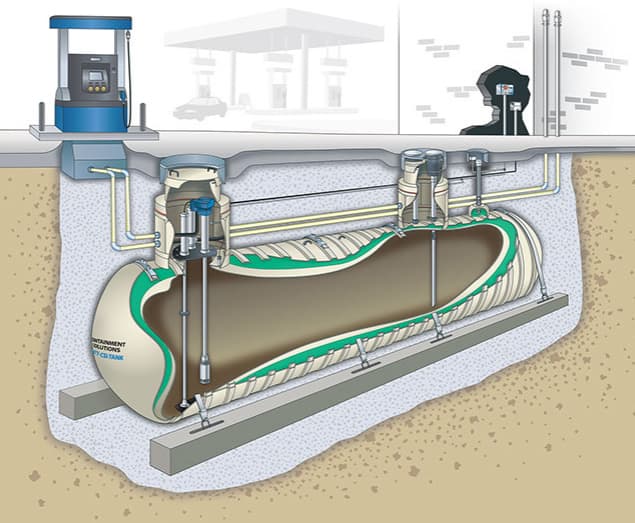
Change orders are not random. On fuel storage and dispensing projects they come from a short, predictable list of causes, and nearly all of them share one trait: something was left to be discovered in the field that could have been resolved on paper. This article walks through where change orders actually come from on tank projects and what a detailed design settles before a contractor bids.
Where change orders come from
Unknown existing conditions
The most common source. A tank replacement starts, the slab comes out, and the contractor finds a second abandoned tank, a piping run that does not match the old drawings, contaminated soil, groundwater higher than expected, or a foundation that will not carry the new tank. Each one stops work and generates a priced change.
A design investigates the site before the bid. That means reviewing the existing PBS registration and permit history, walking the site, locating the existing piping and utilities, and identifying what is actually in the ground or on the pad. It does not eliminate every surprise, but it converts most of them from mid-construction discoveries into line items the contractor prices up front.
Equipment substitutions
A bid says "double-wall aboveground tank." The fire marshal, on review, wants a UL 2085 protected tank because of separation distances to the property line. Or the owner wanted a specific fuel management system and the contractor carried a different one. Or the overfill prevention valve the contractor priced is not accepted by the county health department.
A design names the equipment: tank listing and construction, overfill prevention, spill containment, leak detection, ATG, dispensers or generator supply components, and the piping system by material and listing. Substitutions still happen when a product is unavailable, but they happen against a defined baseline rather than a blank.
AHJ comments after the bid
This is the change order that owners find hardest to accept because it feels like nobody could have known. In practice, the AHJs are consistent. SCDHS Article 12, NYSDEC Part 613, Nassau Article XV, Westchester Article XXV, the fire code as adopted locally, and Virginia DEQ and the Statewide Fire Prevention Code each publish what they require. When the permit application goes in after the contract is signed, every comment becomes a change. When it goes in before pricing, every comment becomes a design revision.
Containment and electrical classification surprises
Two of the most expensive categories.
- Containment. Secondary containment for the tank is usually understood. Containment at the fill, at the transfer point, under dispensers, and along piping runs is where projects get caught. County health departments on Long Island are specific about this. If the bid did not include it, the change order will.
- Electrical classification. NFPA 30A and the electrical code define classified areas around dispensers, vents, fills, and sumps. Conduit, seals, wiring methods, and fixture ratings inside those areas cost more. A bid that carries electrical as an allowance without a classification drawing is a bid that will change.
A design shows the containment and the classified area boundaries on the drawings so the electrical contractor and the petroleum contractor price the same thing.
Sump and piping routing conflicts
Piping looks simple until it has to cross a footing, avoid a storm drain, maintain slope back to the tank, stay within a containment envelope, and land in an STP sump or a dispenser sump at the right elevation. Routing conflicts discovered during installation usually mean rework, more trench, more concrete, and sometimes a different sump.
A design routes the piping on a plan and, where it matters, in section. It coordinates sump locations and depths with the tank, the dispensers, and the site. The contractor can see the conflict before the trench is open.
What a design resolves before bid
Put together, a detailed fuel-system design produces a scope the contractor can price with far fewer assumptions.
- Existing conditions documented, including what is being removed or abandoned and how.
- Every AHJ identified, with their requirements built into the drawings.
- Equipment selected and specified by listing and function, so bids are comparable.
- Tank foundation, anchorage, and setbacks confirmed.
- Secondary containment and spill control shown at every point it is required.
- Electrical classification boundaries drawn so electrical scope is priced, not carried as an allowance.
- Piping routed, sloped, and coordinated with sumps and site features.
- Testing, commissioning, and closeout requirements stated so they are in the bid and not in a change order.
This is the practical meaning of "Design First. Build With Confidence." The point is not to produce a thicker set of drawings. It is to move the decisions that would otherwise be made in the field, under schedule pressure and at change-order pricing, to a point where they can be made deliberately.
What design does not do
I want to be direct about the limits. A design does not remove every unknown. Soil conditions, weather, supply chain, and utility conflicts can still change a job. It does not replace the contractor's judgment in the field, and it does not make a low bid a good bid. What it does is shrink the list of things that can go wrong to the ones that genuinely could not be known, and it gives the owner, the contractor, and the AHJ a shared reference for resolving those when they appear.
It also changes the character of the change orders that remain. A change against a defined scope can be priced against the drawings. A change against an undefined scope is a negotiation.
Who this matters for
If you are planning a new fueling system, a tank replacement, a capacity expansion, or a conversion from underground to aboveground storage, this is the phase to invest in. The fuel-system design service at Zambrano Enterprises produces the drawings, specifications, and permit submittals that define the scope. If you are at the beginning of a project and are not sure where to start, the new fueling system page walks through the first steps.
Contractors benefit from this too. A contractor bidding a defined scope can price it accurately and build it without carrying risk they cannot see. Many of the contractors I work with prefer it for exactly that reason.
If you are weighing whether a design phase is worth it for your project, the best way to find out is to describe the site, the product, and the existing system. Discuss your project through the inquiry form at /contact-us and I will give you a direct answer about what a design would resolve for you.